Work Product Doctrine: What Stays Protected and What Doesn't
.png)

The work product doctrine is one of the most practical discovery protections in litigation, and one of the easiest to accidentally weaken. It does not hide “everything a lawyer touches.” It protects certain materials prepared because of litigation, primarily to preserve the adversarial process and counsel’s ability to investigate, test theories, and plan strategy.
Below is a litigation-focused guide to what usually stays protected, what often does not, and how to reduce waiver risk while still working efficiently.
Work product doctrine vs attorney-client privilege (quick clarity)
These two protections overlap in practice but they are not the same.
- Attorney-client privilege protects confidential communications between lawyer and client for the purpose of legal advice.
- Work product doctrine protects materials prepared by or for a party (or its representative) in anticipation of litigation.
A key difference: work product can cover items that are not communications at all (for example, interview notes, chronologies, issue lists, draft outlines). Also, unlike privilege, work product may sometimes be discoverable upon a heightened showing (discussed below).
What “in anticipation of litigation” really means
Courts commonly look for a real litigation purpose, not merely a business purpose. A helpful way to think about it:
- If the document would likely have been created in substantially similar form even if no litigation was expected, it is less likely to qualify.
- If the document was created because litigation was expected or ongoing, and it reflects litigation investigation or strategy, it is more likely to qualify.
That “why was this created” question is where most disputes happen, especially for insurers, corporate risk teams, HR investigations, and incident reporting.
The two levels of work product protection
Work product is often discussed in two tiers:
Ordinary (fact) work product
This includes factual materials assembled for litigation (for example, witness statements, factual chronologies, collections of key records, investigator reports prepared for counsel). It is generally protected, but it may be discoverable if the requesting party shows substantial need and undue hardship in obtaining the substantial equivalent by other means.
Opinion work product (stronger protection)
This covers an attorney’s mental impressions, legal theories, case evaluation, and strategy (for example, margin notes that assess credibility, a “themes” memo, settlement posture notes, deposition goal lists that reveal theory of liability). Courts treat this as highly protected, and it is much harder for an opponent to obtain.
What usually stays protected (with examples)
Work product protection is strongest when materials are clearly tied to litigation tasks and created at counsel’s direction.
Common examples that are often protected:
- Attorney notes and annotations on medical records, police reports, contracts, or discovery responses.
- Interview notes and witness prep notes (especially when they reveal what counsel focused on).
- Internal case strategy memos: liability analysis, damages evaluation, jury themes.
- Deposition outlines and cross outlines that reflect counsel’s theory and sequencing.
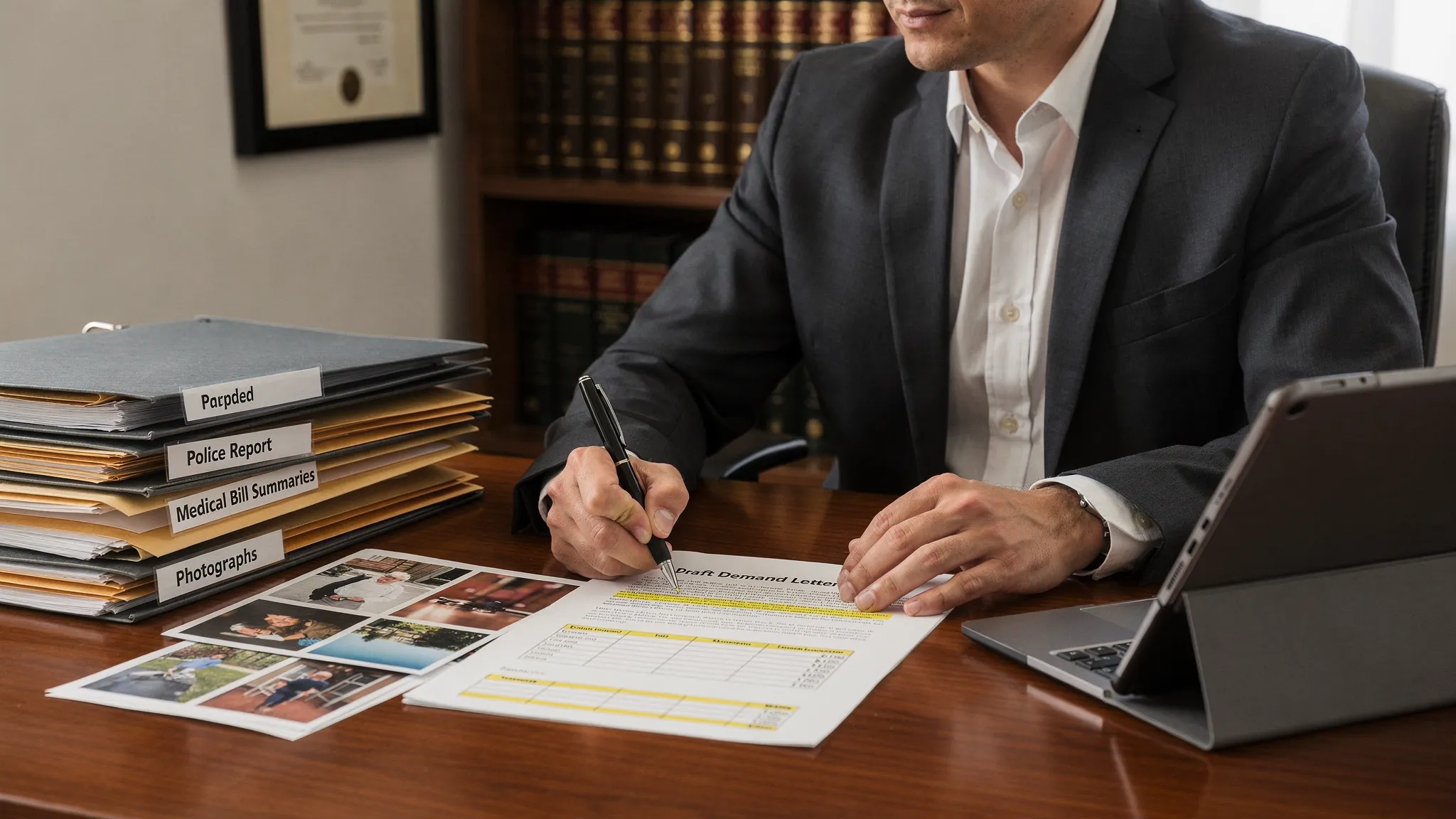
- Draft demand letters or draft pleadings that reveal strategy or concessions.
- Counsel-directed investigations: investigator summaries created for litigation.
Even when underlying facts are discoverable, the “map” of what counsel found important can remain protected.
What often is not protected (or is only partially protected)
Many “litigation-adjacent” documents get challenged because they are operational, routine, or shared too broadly.
Examples that frequently fall outside work product (depending on jurisdiction and context):
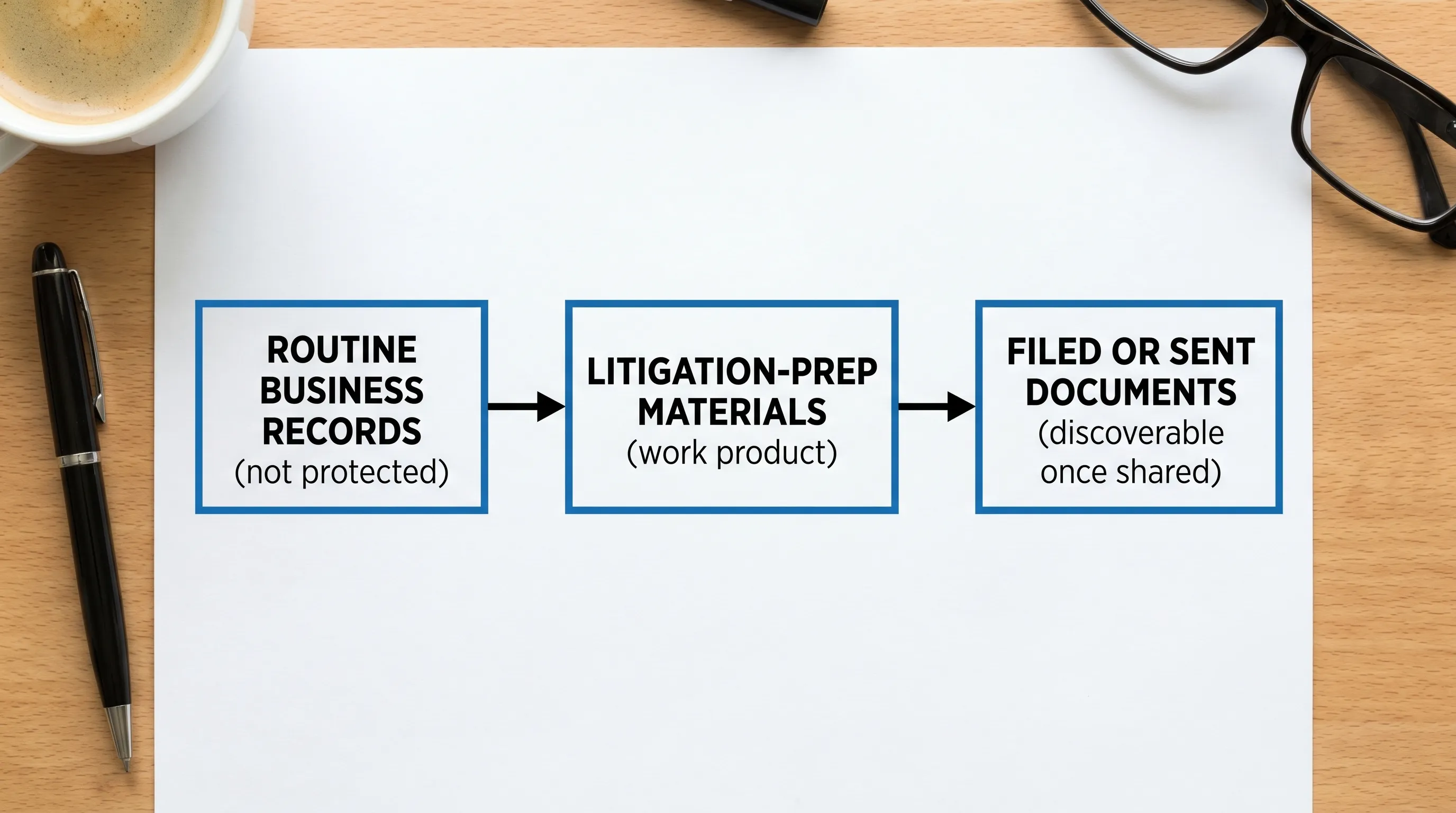
- Routine business records created regardless of litigation (incident reports, maintenance logs, standard QA audits).
- Claims-handling materials created in the ordinary course before a real litigation expectation attaches.
- Purely factual information that can be obtained through other means (for example, names of witnesses, dates of treatment). The facts are discoverable even if your compilation may be protected.
- Communications with third parties not necessary to legal work (especially if confidentiality is not maintained).
- Final versions of materials intended to be sent to the other side (a sent demand letter itself is not protected simply because lawyers drafted it).
When litigating insurance or claims-driven matters, separating ordinary-course operations from litigation-mode preparation is critical. Some teams reduce ambiguity by using dedicated litigation workflows and clearly labeled counsel-directed workstreams, while the business side runs separately. In parallel, claims and underwriting organizations increasingly rely on automation platforms (for example, AI-powered insurance automation) to standardize intake and claims operations, which can help clarify what is routine business output versus what was created specifically for litigation.
A practical table: protected vs not protected (typical outcomes)
Outcomes vary by court, but this is a useful “first pass” for issue-spotting.
| Item | Typical status | Why | How to keep protection stronger |
|---|---|---|---|
| Attorney case strategy memo | Protected (often opinion work product) | Reveals mental impressions and legal theories | Keep internal, limit distribution, label as counsel work product |
| Deposition outline | Protected (often opinion work product) | Reflects theory and planned impeachment | Store in counsel workspace, avoid forwarding outside core team |
| Witness interview notes | Often protected | Selection and phrasing can reveal strategy | Have counsel direct interviews, keep notes confidential |
| Investigator report created for counsel | Often protected | Prepared for litigation at counsel’s direction | Retain through counsel, document litigation purpose |
| Routine incident report (standard form) | Often not protected | Ordinary-course business record | If a separate litigation memo is needed, create it distinctly |
| Final demand letter sent to opponent | Not protected | Intended disclosure; adversary already has it | Protect drafts and internal evaluation notes, not the final sent version |
| Medical record summary with attorney commentary | Mixed | Facts may be discoverable, commentary may be protected | Separate “neutral summary” from “strategy notes” |
The biggest way work product is lost: waiver and sloppy sharing
Work product is not automatically destroyed by every disclosure, but sharing can create avoidable fights. Common risk points:
- Forwarding attorney work product broadly within a company (especially to employees unrelated to the litigation).
- Sharing with vendors without clear confidentiality and litigation purpose.
- Mixing business advice and legal strategy in the same document thread.
- Producing drafts or internal annotations because they were stored alongside final versions with no clear labeling.
A practical habit that helps: separate “litigation strategy” files from “business operations” files, and avoid embedding legal assessments into routine operational records.
The “substantial need” exception (why some work product becomes discoverable)
Ordinary fact work product can sometimes be ordered produced if the requesting party shows:
- Substantial need for the materials to prepare their case, and
- Undue hardship in obtaining the substantial equivalent by other means.
In practice, this shows up when a witness is unavailable, memories have faded, or the only contemporaneous account sits inside a protected file. Even then, courts may require redactions to protect opinion work product.
Tips to protect work product without slowing your team down
You do not need gimmicks. You need consistent process.
- Be explicit about the litigation purpose when counsel directs a task (even a short note can help later).
- Keep strategy and facts in separate documents when possible (for example, one neutral medical chronology, one attorney impressions memo).
- Control distribution: share work product only with people who truly need it for the litigation.
- Use counsel-centered collaboration for drafts, outlines, and annotations so you can track what is a draft and what was sent.
For litigation teams handling high document volume, speed often increases waiver risk because drafts, notes, and finals get mixed. A workflow that generates case-ready outputs while keeping internal strategy materials organized can reduce accidental production.
Frequently Asked Questions
Is a demand letter protected by the work product doctrine? A demand letter that is actually sent is generally not protected because it is intended for the opposing party. Drafts and internal evaluations that reflect legal strategy are more likely to be protected.
Are facts protected if they appear in a work product document? The underlying facts are usually discoverable through interrogatories, depositions, or requests for admission. The work product doctrine protects the document or compilation (and especially attorney impressions), not the facts themselves.
Does work product protection apply before a lawsuit is filed? Yes, it can. The key question is whether the material was prepared in anticipation of litigation, even if litigation had not yet been filed.
Are communications with experts protected as work product? Often yes for non-testifying consulting experts, and sometimes in limited ways for testifying experts, but expert discovery rules vary and can override expectations. Treat expert communications carefully and assume discoverability unless you have a clear rule basis.
Can sharing work product with a vendor waive protection? It can, depending on the vendor’s role and confidentiality safeguards. If the vendor is necessary to legal preparation and confidentiality is maintained, protection is more defensible. Loose sharing and mixed business purposes create risk.
Move faster without losing control of work product
If your team is juggling medical records, incident files, deposition prep, and demand packages, the hardest part is often staying organized enough to protect what should remain protected.
TrialBase AI is built for litigation support from intake to verdict, helping legal teams turn documents into litigation-ready outputs like medical summaries, deposition outlines, and demand letter drafts in minutes, while keeping case materials in a unified workflow. Explore how it fits your process at TrialBase AI.