How to Write a Legal Brief That Persuades Fast
.png)
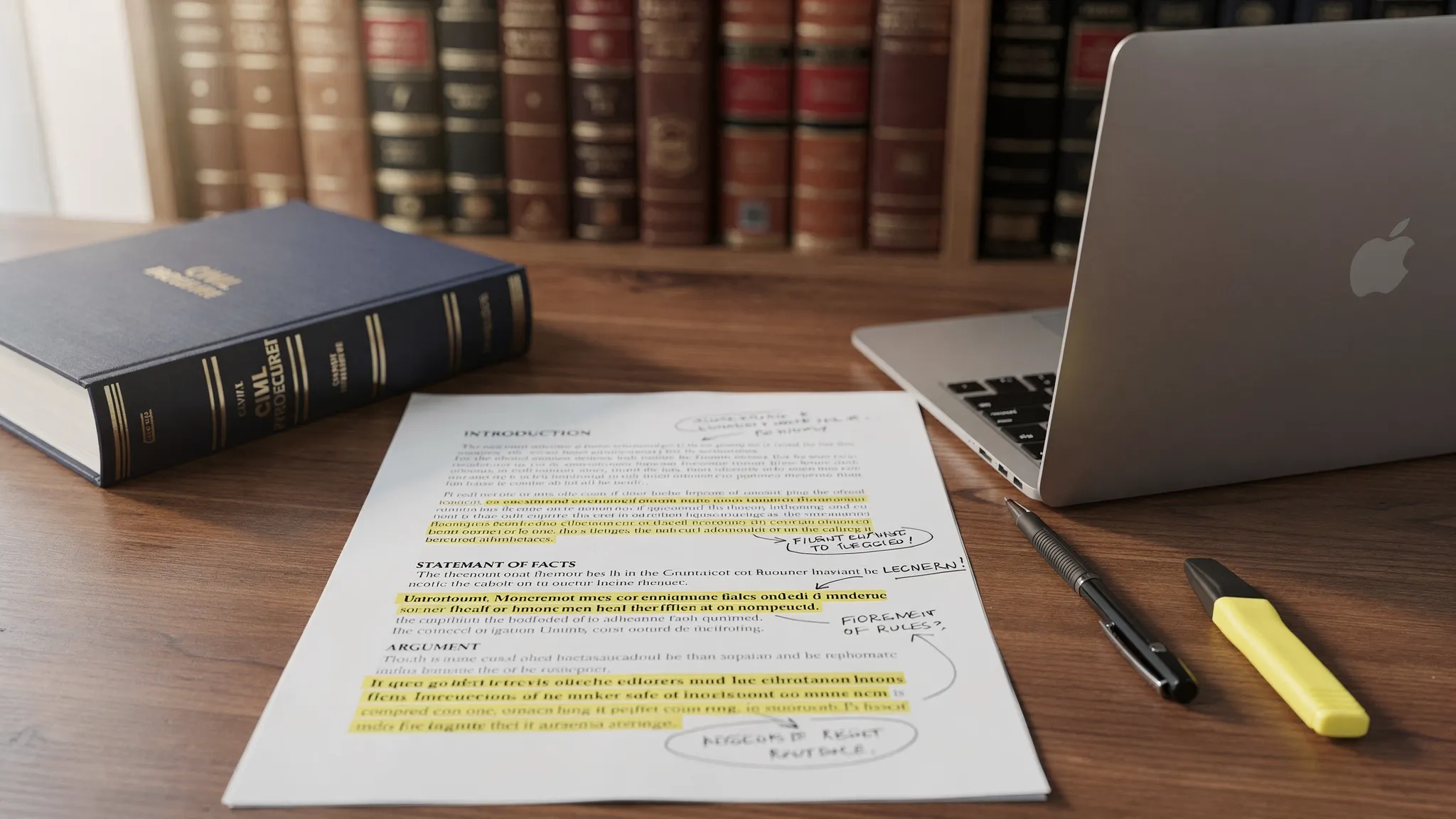
Judges and clerks read fast. Opposing counsel reads aggressively. A persuasive legal brief, especially on a busy docket, wins attention by making the right answer feel obvious within the first page.
Below is a practical structure and writing method you can use to persuade quickly without sacrificing accuracy.
Start with the outcome, then earn it
Before you draft, write one sentence that states the relief and the legal reason.
Example: “The Court should grant Defendant’s motion to dismiss because the complaint pleads no facts establishing duty under [controlling statute/case].”
That sentence becomes your north star. If a paragraph does not help prove it, cut it.
Use a “one-page” architecture (even when the brief is longer)
Even if your brief runs 10 to 25 pages, it should feel like it has a one-page plan. A good reader experience is predictable.
A fast, court-friendly brief structure
| Brief section | What it must do | How to make it persuasive fast |
|---|---|---|
| Introduction | Deliver the answer and the why | Lead with the rule and the result, not background |
| Statement of issues | Frame the dispute in your language | Write issues that imply the conclusion |
| Facts | Tell a clean story that supports the elements | Use chronology, names, and record cites, minimize adjectives |
| Argument | Prove each element with authority and record | Use point headings that read like mini-holdings |
| Conclusion | Repeat the relief requested | Make it easy to copy into an order |
If your jurisdiction requires a specific order (for example, separate sections for jurisdiction, standard of review, or summary of argument), follow the local rules first.
Write point headings that do the persuading for you
A judge may skim headings before reading any paragraph. If your headings are neutral, you lose that first pass.
Weak heading: “Standard of Review”
Stronger heading: “Dismissal is required because the complaint alleges conclusions, not facts, under Rule 12(b)(6).”
Strong point headings work like a roadmap and a preview of the holding you want.
Put the standard of review to work (do not bury it)
The standard of review is not filler. It is leverage.
Instead of dropping it in as a generic block, connect it directly to your theory:
- If review is de novo, say why the court can resolve the issue cleanly on the papers.
- If abuse of discretion, emphasize the trial court’s permissible range of choices.
- If substantial evidence, remind the court what it must defer to, and what it cannot reweigh.
Then use the standard as a refrain in your argument: “Under de novo review, the legal defect is dispositive.”
Make the facts earn credibility
Persuasion accelerates when your facts feel indisputable. Aim for “record-first” storytelling.
Practical fact-writing rules
- Prefer verbs and dates over adjectives.
- Tie key facts to elements (duty, breach, causation, damages) rather than narrating everything.
- Use record cites early and often, but only for facts that matter.
- Acknowledge bad facts briefly, then pivot to why they do not change the legal outcome.
If your case is document-heavy (medical records, incident reports, discovery responses), consider generating a working summary first so your “Facts” section stays coherent. Tools that streamline drafting inside your writing environment can help, such as an AI copilot for Word and Google Docs that speeds up rewrites and formatting while you remain responsible for the final legal analysis.
Build the argument in element-by-element blocks
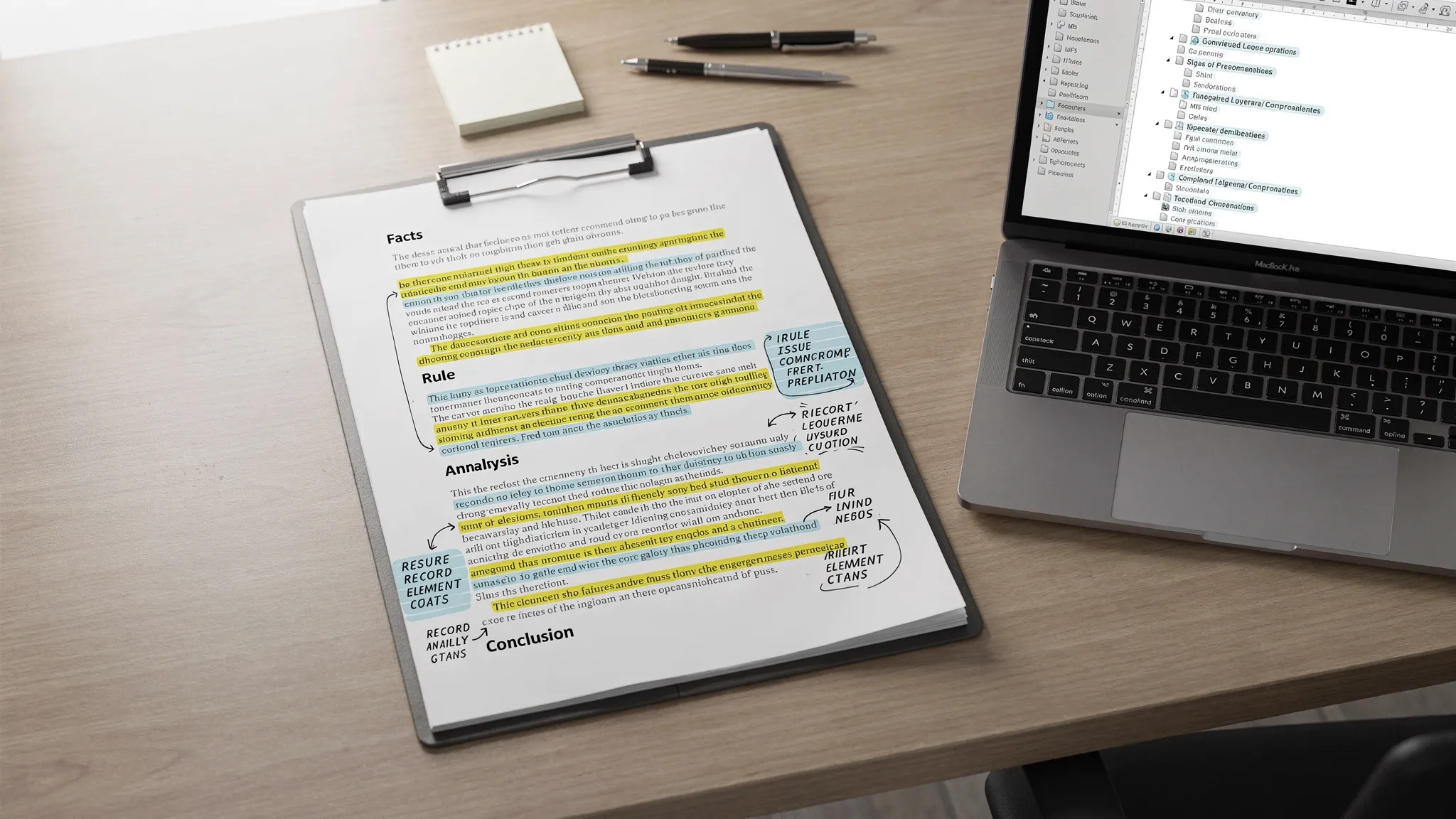
Most briefs get slower to read because they argue by vibes instead of by legal requirements. To persuade fast, treat each claim or defense like a checklist of elements.
A simple pattern that works:
- State the governing rule (with controlling authority).
- Explain the rule in plain English.
- Apply the rule to your key facts (with citations).
- Close the section with a short “therefore” sentence that matches your point heading.
This keeps the court oriented and makes your conclusion feel inevitable.
Cite like you want the court to trust you
Citations are part of persuasion. They signal reliability.
- Use the most controlling authority available (binding first, then persuasive).
- Quote sparingly. Paraphrase the rule, then quote only the decisive phrase.
- When you cite the record, cite it as if someone will check (because someone might).
- Avoid string cites unless each case adds something distinct.
Edit for speed: cut 20 percent without losing meaning
A fast legal brief is rarely written fast. It is edited fast.
Do one dedicated “speed pass”:
- Delete throat-clearing (“It is well settled that…”) unless it adds substance.
- Replace long lead-ins with direct statements.
- Shorten sentences that exceed two lines on the page.
- Remove duplicated facts that appear in both Facts and Argument unless needed for the element.
A helpful test: if you had 60 seconds with the judge, which three paragraphs would you want read? Make sure those three are early, clean, and well-supported.
Quick final checklist (before filing)
- Does page one state the relief and the legal reason clearly?
- Do headings summarize your winning theory?
- Are facts chronological, element-linked, and consistently cited?
- Does every argument section follow rule, explanation, application, conclusion?
- Are citations and record references accurate and easy to verify?
- Did you comply with local rules (formatting, word count, required sections)?
Frequently Asked Questions
How long should a legal brief be to persuade fast? The ideal length is “as long as necessary, as short as possible.” Courts often set page or word limits, but clarity and structure matter more than raw length.
What is the most important part of a persuasive brief? Your first page. A clear introduction with the rule and requested relief, plus strong point headings, often determines whether the reader leans in.
Should I include every fact I know? No. Include the facts that prove or negate elements, affect the standard of review, or address expected counterarguments. Extra facts slow the court down.
Can AI help me write a legal brief? AI can speed up summarizing, outlining, and editing, but it can also introduce errors. Use it as a drafting assistant, verify every citation and assertion, and apply your professional judgment.
Streamline the record before you draft
If your brief depends on dense records (medical charts, discovery, prior filings), getting to a reliable case summary first can save hours and reduce missed facts. TrialBase AI helps litigation teams turn uploaded documents into litigation-ready work product in minutes, including summaries and other case materials you can build from.
Explore TrialBase AI here: ai.trialbase.com