Deposition Preparation: The 2-Hour Plan for Any Witness
.png)
Most depositions are won or lost before the court reporter ever swears in the witness. The goal of deposition preparation is not to “teach” testimony, it is to make the witness comfortable, consistent, and defensible while protecting the record for motion practice and settlement leverage.
What follows is a repeatable 2-hour plan you can use for almost any witness when time is tight.

Before you start: define the win in one sentence
Take 60 seconds and write one sentence that answers:
“If this deposition goes well, what will opposing counsel be unable to do afterward?”
Examples:
- “They will not be able to pin the witness to a clean admission on notice and prior similar incidents.”
- “They will not be able to undermine causation with inconsistent treatment dates or prior injuries.”
- “They will not be able to use a stray soundbite to support a comparative fault theme.”
This single sentence prevents unfocused prep and keeps the next 2 hours disciplined.
The 2-hour deposition preparation plan (works for any witness)
Use the timeline below as your agenda. If you need to cut time, keep the first 70 minutes intact.
| Time block | What you do | Output you want |
|---|---|---|
| 0 to 10 | Set rules and reduce anxiety | Witness understands what a deposition is, pacing, and “I don’t know” is allowed |
| 10 to 30 | Lock the chronology | A clean timeline with no date gaps or contradictions |
| 30 to 55 | Identify the 5 to 7 “danger zones” | A shortlist of topics where inconsistency, speculation, or overreach is likely |
| 55 to 80 | Practice tight answers (style, not substance) | Witness stays within personal knowledge and avoids volunteering |
| 80 to 105 | Exhibits and document alignment | Witness can recognize key records and avoid being boxed by a document |
| 105 to 120 | Closing script and logistics | Witness knows what to do if confused, tired, or pressured |
0 to 10 minutes: ground rules that prevent unforced errors
Keep this short and concrete. You are not giving a lecture, you are setting behavioral guardrails.
Cover:
- The witness must pause before answering (gives you time to object and prevents “automatic” answers).
- It is always acceptable to say “I don’t know” or “I don’t recall” if true.
- If the question is unclear, the witness should ask for it to be repeated or rephrased.
- The witness should answer only the question asked, then stop.
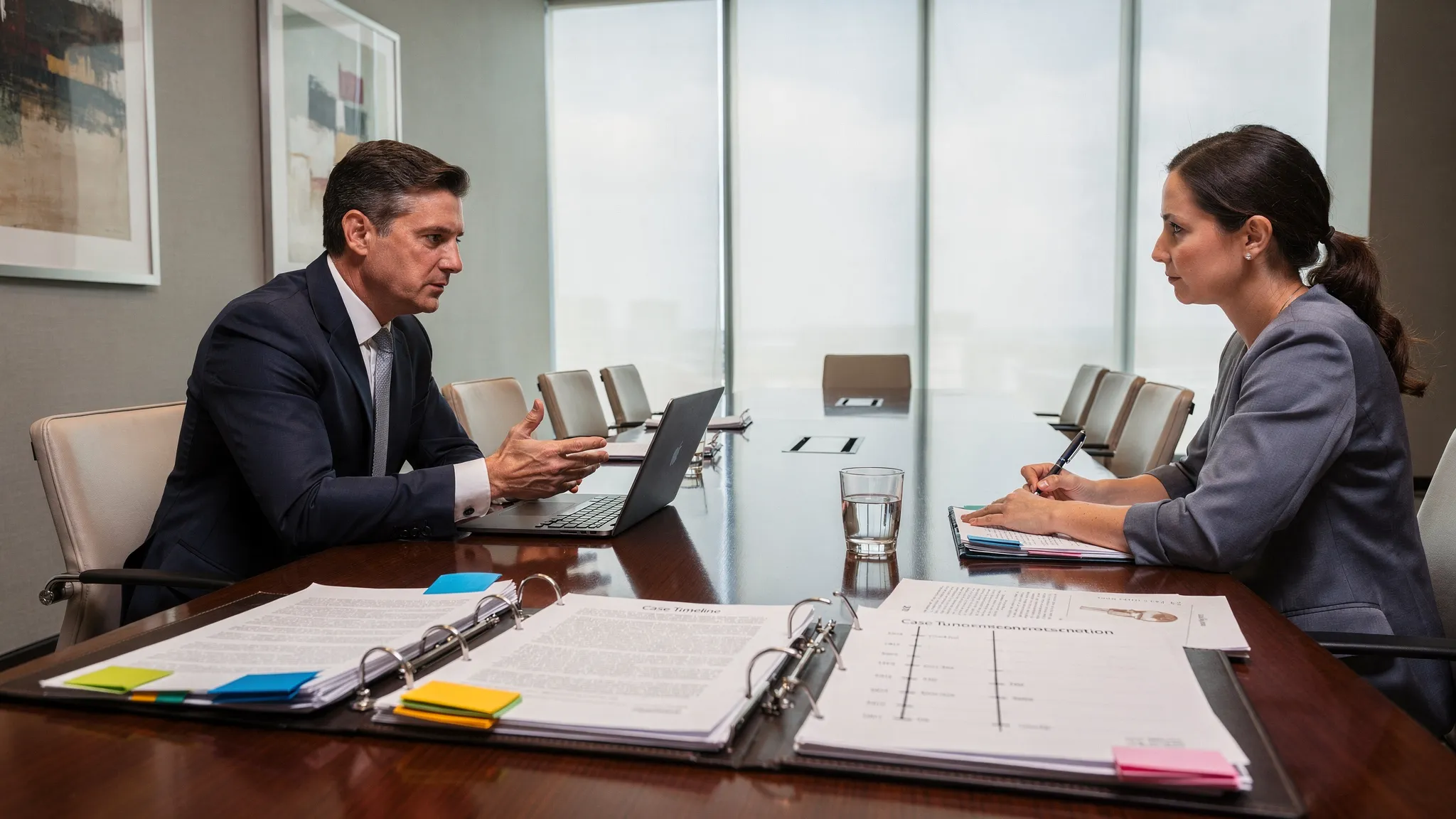
10 to 30 minutes: build the timeline (the highest ROI step)
Chronology is where most impeachment comes from. Build a simple timeline from the witness’s perspective using anchors.
Good anchors:
- “Morning vs afternoon” before “10:30 a.m.”
- “Before the ER visit” and “after PT started”
- “First complaint” and “first report to supervisor”
When the witness is uncertain, mark it as uncertain. Do not pressure precision. Precision that is wrong is a gift to cross.
30 to 55 minutes: pick danger zones (and decide the safe lane)
Choose 5 to 7 topics that could swing the case or create a clean clip for summary judgment oppositions.
Common danger zones:
- Prior incidents, prior injuries, prior claims
- Knowledge and notice (“who knew what, when”)
- Causation language (especially in injury cases)
- Policies and training (for entities and supervisors)
- Estimates and numbers (times, distances, speeds, weights)
- Social media, surveillance, or post-incident conduct
For each danger zone, define the “safe lane”: what the witness can testify to from personal knowledge, and what must be framed as uncertainty or lack of access.
55 to 80 minutes: practice answer discipline (without scripting)
This is the core skill: accurate, narrow, calm answers.
Run short drills:
- Ask a leading question that bakes in assumptions. Have the witness separate what they know from what they are assuming.
- Ask a compound question. Have the witness request it be broken up.
- Ask a “why” question. Have the witness answer facts first, then stop.
A simple standard you can repeat: “If you did not see it, hear it, do it, or record it, treat it as not personal knowledge.”
80 to 105 minutes: exhibits, documents, and “what this shows” traps
Opposing counsel will use documents to force certainty and to turn “maybe” into “yes.” Your job is to make documents familiar enough that the witness does not panic.
Focus on:
- Authentication basics (recognize, identify, explain context)
- Dates and authorship (who created it, when, based on what)
- The difference between “this document says” and “I personally observed”
If this is a medical or technical file, align the witness with plain-language themes (what was reported, what was ruled out, what changed over time).
105 to 120 minutes: the closing script
End with three sentences the witness can rely on under pressure:
- “I want to be accurate, can you repeat the question?”
- “I can answer based on what I personally know.”
- “I do not recall that, and I do not want to guess.”
Confirm logistics (breaks, tech setup, exhibits delivery, confidentiality) and remind the witness: calm and precise beats fast and complete.
How the plan changes by witness type (quick guide)
Different witnesses fail differently. Adjust emphasis, not the whole structure.
| Witness type | Biggest risk | Spend extra time on |
|---|---|---|
| Plaintiff | Chronology drift, overexplaining symptoms | Timeline, prior history, “I don’t recall” comfort |
| Treating physician | Causation overreach, chart traps | Chart review, phrasing that stays within treatment role |
| Corporate representative (30(b)(6)) | “I didn’t know” admissions, policy confusion | Scope of topics, source documents, what the entity knows |
| Fact employee witness | Speculation about motives/policies | Personal knowledge boundaries, document recognition |
| Expert | Soundbites, methodology misstatements | Terms of art, assumptions, what was reviewed |
Where AI can save time in deposition preparation (without cutting corners)
The bottleneck is rarely “asking questions.” It is finding what matters in the record fast enough to prep with confidence.
A litigation support tool like TrialBase AI can reduce prep time by turning uploaded records into deposition-ready materials such as:
- Deposition outlines tailored to the documents
- Medical summaries and chronology views for injury files
- Case analytics to spot inconsistencies or missing links
Use that output to accelerate your 10 to 30 minute timeline step and to prioritize the 30 to 55 minute danger zones.
Frequently Asked Questions
How long should deposition preparation take for a typical witness? Many witnesses benefit from 2 to 4 hours total. If you only have 2 hours, prioritize chronology, danger zones, and answer discipline.
Is it okay to practice questions and answers with a witness? You can practice style and clarity, but avoid scripting testimony. Focus on accuracy, personal knowledge limits, and handling unclear or unfair questions.
What is the single most important deposition prep activity? Building a clean timeline. Most impeachment opportunities come from date drift, sequence confusion, and inconsistent “first time” statements.
How do I prep a 30(b)(6) witness quickly? Define the scope, identify the source documents that establish company knowledge, and rehearse how to answer when information is outside the noticed topics.
Make deposition prep faster and more consistent
If your team is juggling medical records, incident reports, discovery, and prior testimony, the hardest part is getting to a deposition outline and a reliable chronology quickly.
TrialBase AI helps legal teams go from document upload to litigation-ready work product in minutes, including deposition outlines and medical summaries. Explore TrialBase AI to streamline your next deposition preparation cycle without sacrificing accuracy.