Litigation Partner: How to Vet Vendors and Protect Privilege
.png)
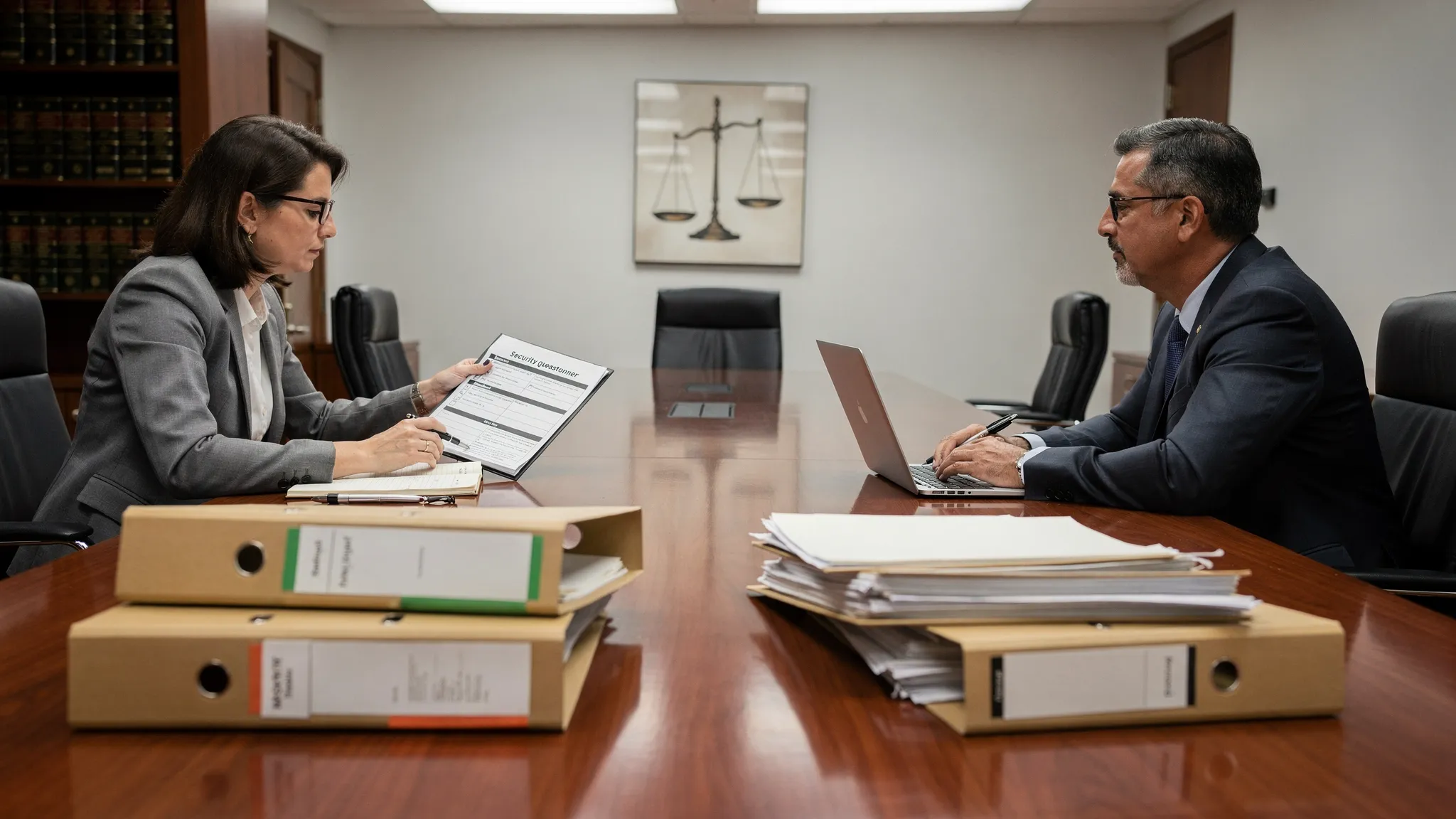
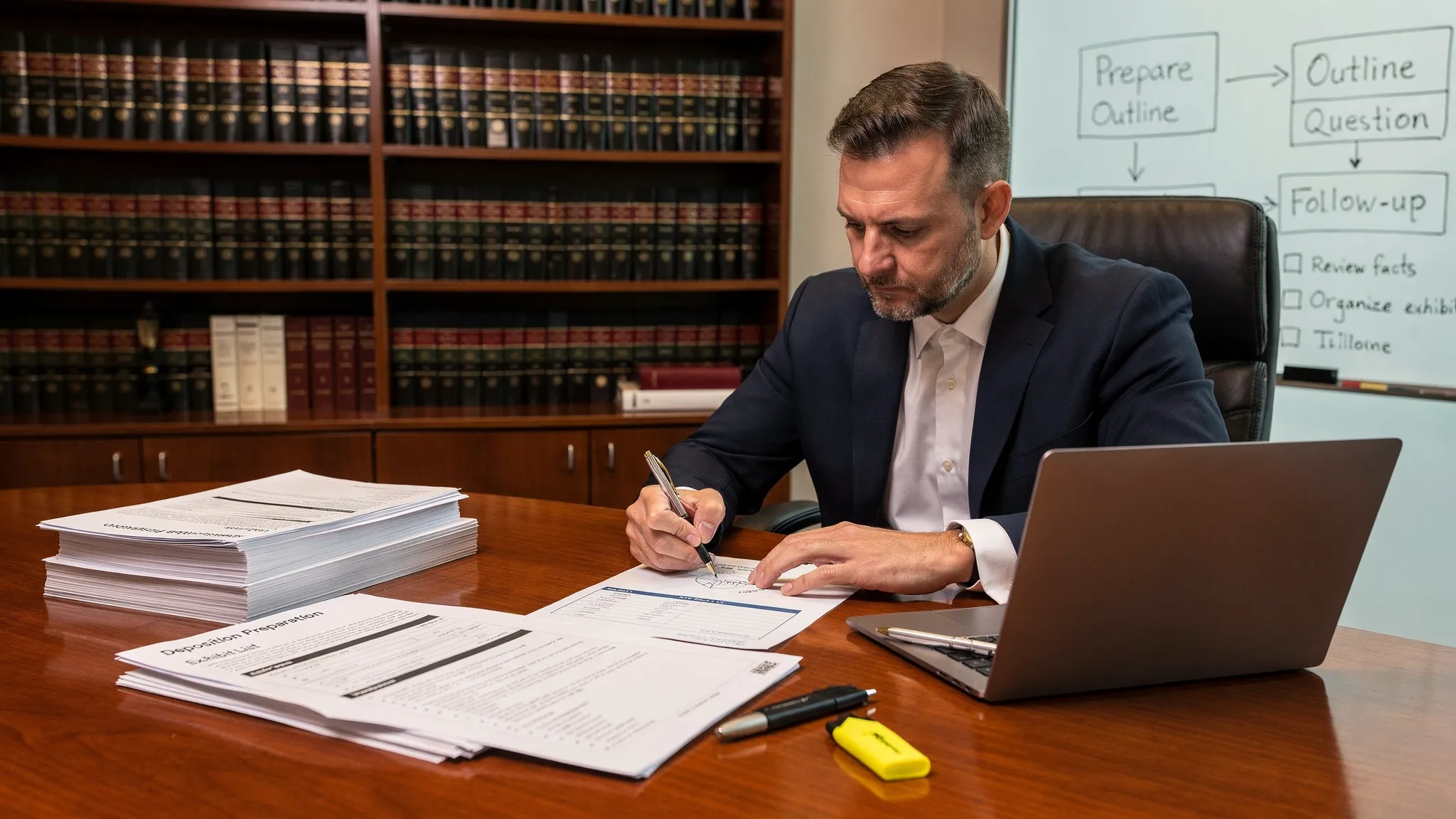
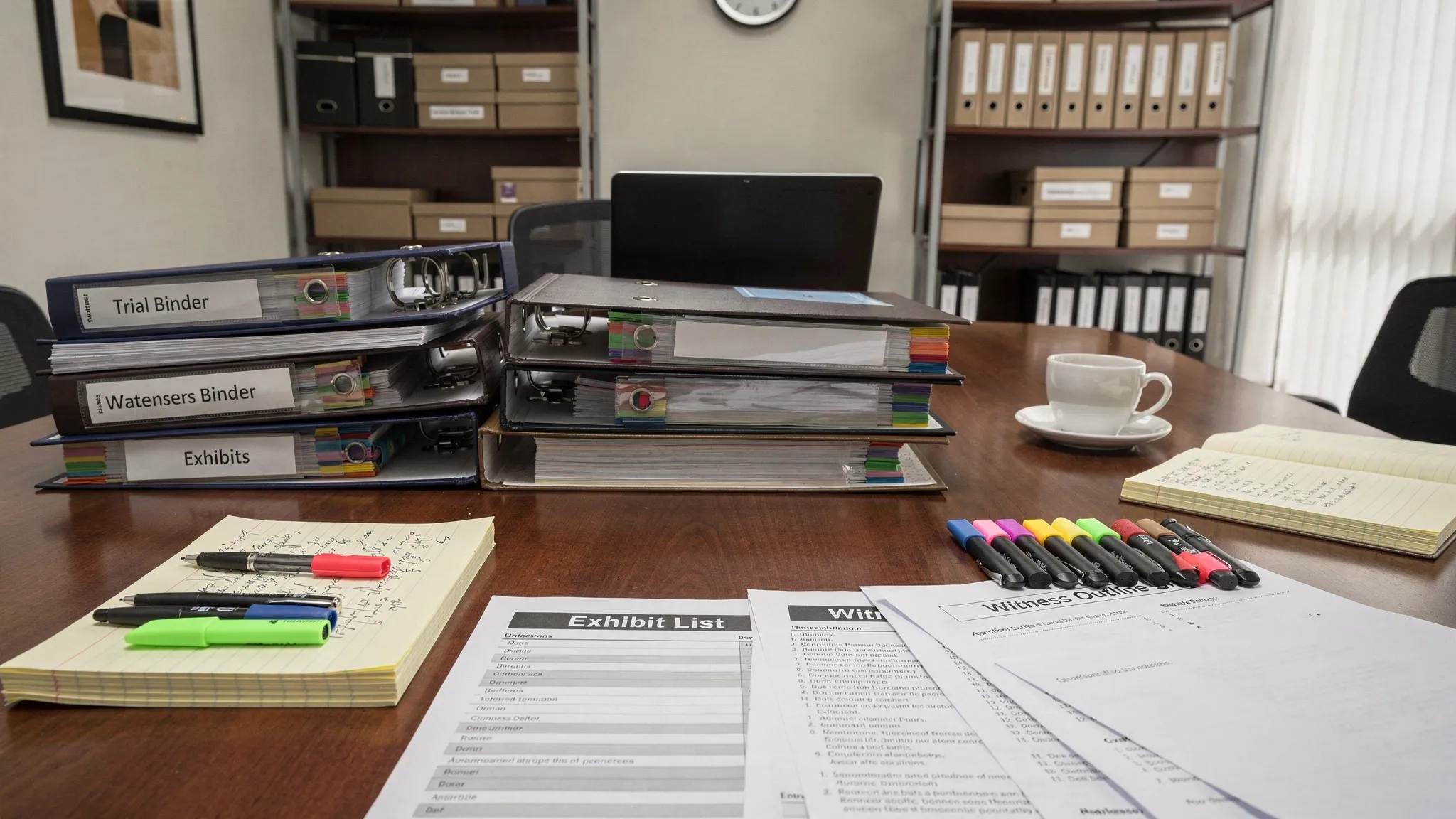
When a vendor touches your case file, they are not “just a tool.” They function as a litigation partner in the most literal sense: they can influence deadlines, strategy, discovery posture, and (if you get it wrong) privilege.
This guide is a practical, time-efficient way to vet litigation support vendors, including AI tools, while reducing the risk of waiver, leakage, or bad outputs landing in your record.
Start with a “data map,” not a demo
Before you compare vendors, define what they will actually see and do. A vendor that only formats exhibits is a different risk profile than one that ingests medical records, settlement communications, and attorney notes.
Write down, for this vendor relationship:
- Data types: client communications, medical records, discovery productions, work product, expert materials.
- Case stages: intake, pre-suit demand, discovery, deposition prep, trial.
- Outputs: demand letters, summaries, deposition outlines, chronologies, trial materials.
- Who uses it: attorneys only, paralegals, experts, co-counsel.
That data map becomes your due diligence checklist and your contract scope.
Know where privilege is fragile with third parties
Two doctrines matter most in day-to-day vendor use:
- Attorney-client privilege: generally requires confidentiality and legal purpose.
- Work product protection: protects materials prepared in anticipation of litigation.
Third-party involvement is not automatically fatal, but it is where mistakes happen. Courts often focus on whether the third party was necessary to the legal advice and acted as an agent of counsel, rather than a casual recipient.
A frequently cited example is United States v. Kovel (2d Cir. 1961), which recognized privilege can extend to certain third parties (there, an accountant) when their involvement is necessary to translate or facilitate legal advice. The practical takeaway for modern vendors: structure the relationship so the vendor is acting to assist counsel and under counsel’s direction, not as an independent recipient of client confidences.
Just as important: plan for accidental disclosure. Federal Rule of Evidence 502 provides mechanisms to limit waiver and encourages court orders (such as 502(d) orders) that can reduce the consequences of inadvertent production. See FRE 502 at Cornell Law.
Vet a litigation partner vendor with a “four-lens” review
Treat vendor diligence like you would evaluate an expert: qualifications, methods, reliability, and control.
| Lens | What you are trying to learn | High-signal questions to ask | Red flags |
|---|---|---|---|
| Legal and privilege posture | Whether the vendor understands confidentiality and litigation workflows | Will you sign an NDA and a services agreement that treats you as the data owner? Do you support privilege and confidentiality labeling? | “We’re not a legal vendor, so we don’t do NDAs.” |
| Security and privacy | Whether your data is protected at rest, in transit, and operationally | What encryption is used in transit and at rest? What are your access controls (SSO, MFA, role-based access)? What is your incident response timeline? | Vague answers, no written security materials, or “trust us.” |
| Data governance | Whether your data is retained, reused, or shared | Is customer data used to train models or improve the service by default? What are retention and deletion timelines? Do you use sub-processors? | No clear retention policy or broad reuse rights. |
| Quality and defensibility | Whether outputs are reliable enough for litigation use | How do you handle citations to source documents? What QA exists for summarization errors? Can we constrain output to our uploaded documents? | “The model is accurate” with no method, no review workflow. |
If you want a north star for attorney competence with technology, many firms reference ABA Model Rule 1.1, Comment 8 (technology competence) and ABA Model Rule 1.6 (confidentiality). The rules vary by jurisdiction, but the direction of travel is consistent: you must understand the tech enough to supervise it. See the ABA Model Rules.

Contract terms that do the most work for privilege and risk
Many vendor agreements are written for generic SaaS. Litigation workflows need sharper edges. At minimum, your paper should clearly cover:
- Confidentiality and purpose limitation: the vendor may access case materials only to provide the contracted services.
- Data ownership and control: you (or your firm/client, depending on engagement) own the data and outputs.
- No training / no reuse by default: explicit terms governing whether your data can be used to train or improve models.
- Retention and deletion: how long data is stored, how deletion works, and what survives termination.
- Subprocessors: disclosure, approval rights, and flow-down obligations.
- Access controls and auditability: user roles, logging, and the ability to investigate access issues.
- Incident response: defined timelines for notice and cooperation.
If you routinely litigate in federal court, align your e-discovery posture with privilege protection and clawback strategy. Even if you do not cite them in the contract, your workflow should anticipate privilege logging and notice obligations. See FRCP 26(b)(5).
Workflow safeguards that prevent waiver in practice
Privilege is often lost through routine behavior, not bad intent. A strong vendor can still become a weak link if your internal process is loose.
Practical controls that help:
- Least-privilege access: restrict vendor workspace access by matter and role.
- Segregate especially sensitive content: for example, keep settlement strategy memos or attorney notes out of systems that do not require them.
- Label early and consistently: apply “Attorney-Client Privileged” and “Work Product” labels in the source repository before export/upload.
- Counsel review gate: treat vendor outputs as drafts, require attorney review before sending externally or attaching to anything.
- Clawback plan: coordinate with opposing counsel and consider court orders that reduce waiver risk (often via FRE 502(d)).
AI-specific vendor questions (the ones that matter in litigation)
If your litigation partner includes AI-driven document analysis, add a layer of diligence specific to model behavior and data handling:
- Scope control: can the system be limited to your uploaded documents, or does it blend in outside sources?
- Source traceability: can outputs be traced back to specific pages or exhibits to support verification?
- Error handling: what happens when the AI is unsure, and how are contradictions flagged?
- Human and team workflows: can attorneys and staff collaborate without copying data into email chains?
When evaluating AI litigation support tools such as TrialBase AI, use your data map to run a realistic pilot: one medical-heavy matter, one discovery-heavy matter, and one fast pre-suit demand scenario. You are looking for consistent, verifiable outputs (demand letters, medical summaries, deposition outlines) with a workflow your team can supervise.
A simple standard: “Can I explain this to a judge?”
A vendor can be fast, affordable, and polished, and still be a liability if you cannot clearly articulate:
- why the vendor needed access,
- how confidentiality was maintained,
- how outputs were validated, and
- how you prevented inadvertent disclosure.
If you can answer those four points with documentation (security materials, contract terms, and a repeatable workflow), you have a litigation partner relationship that is far more likely to hold up under scrutiny.
This article is general information, not legal advice. Privilege and confidentiality rules vary by jurisdiction and the specific facts of your matter.