Litigation Demand Letter: Tactics to Anchor Settlement Value
.png)
A strong litigation demand letter does more than “ask for money.” It sets the reference point the adjuster or defense counsel will negotiate against. That first credible number becomes the anchor, and if your letter is built like a trial exhibit, it can pull the entire bargaining range upward.
Why the anchor matters in a litigation demand letter
Negotiation research consistently shows that initial figures influence outcomes, even when the other side knows the number is strategic. In practice, the defense will still counter off your opening position, not off what your client “needs.” Your job is to make your anchor feel inevitable by tying it to evidence, verdict risk, and a clean damages model.
The best anchors share three traits:
- They are high, but defensible. A big number with thin support invites a dismissive counter.
- They are easy to retell. If your demand cannot be summarized in 20 seconds internally, it will be discounted.
- They are trial-aligned. The letter reads like the front end of a demonstrative: liability, causation, damages, and risk.
Tactics that raise the settlement ceiling without sounding inflated
1) Lead with a tight theory of liability (before the dollars)
Many demand letters bury liability under medical records. Flip that. Start with a short, prosecutor-clean theory:
- Duty and rule (policy, statute, industry standard, premises condition)
- Breach (what exactly went wrong)
- Causation (why this breach caused these injuries, not “could have”)
- Defenses anticipated (comparative fault, gap in treatment, pre-existing conditions) and your rebuttal
If liability reads as “probable plaintiff verdict,” the defense becomes more receptive to a higher anchor because the number feels like risk pricing, not posturing.
2) Use a “damages architecture” the defense can audit
Anchors stick when your math is transparent. Even if the defense disputes pieces, they will negotiate inside your structure.
A practical approach is to separate:
- Economic damages (specials): medical bills (paid and incurred as applicable), wage loss, future care (with support)
- Non-economic damages (general damages): pain, impairment, loss of enjoyment, disfigurement
- Case “risk multipliers”: facts that increase verdict volatility (egregious conduct, clear policy violations, sympathetic plaintiff, credible witnesses)
Avoid fuzzy phrasing like “significant pain and suffering.” Instead, tie non-economic damages to concrete limitations, duration, and medical corroboration.
3) Show the medical story as a timeline, not a document dump
Adjusters and defense counsel skim. A one-page chronology increases comprehension and makes your anchor feel earned.
Include:
- Date of incident
- First report of injury (with objective findings where possible)
- Imaging and key diagnoses
- Treatment course, compliance, and response
- MMI status or ongoing care plan
- Permanency or impairment discussion when supported
If you can summarize causation and progression in 12 lines, you reduce the odds the defense frames your client as “soft tissue with gaps.”
4) Make your anchor “comparables-backed,” even if you do not overcite
You do not need a treatise, but you do need to signal that your number is grounded in outcomes. Use verdict and settlement comparables where ethically appropriate and available in your jurisdiction, and explain why your case fits the bracket.
A simple framing works:
- “Cases with similar mechanism + similar objective findings + similar duration of treatment have resolved in the $X to $Y range.”
- “This case trends toward the upper half due to A, B, C (liability clarity, permanency, future care, venue).”
The goal is not to “prove” the exact number, it is to make your anchor the most reasonable starting point on the page.
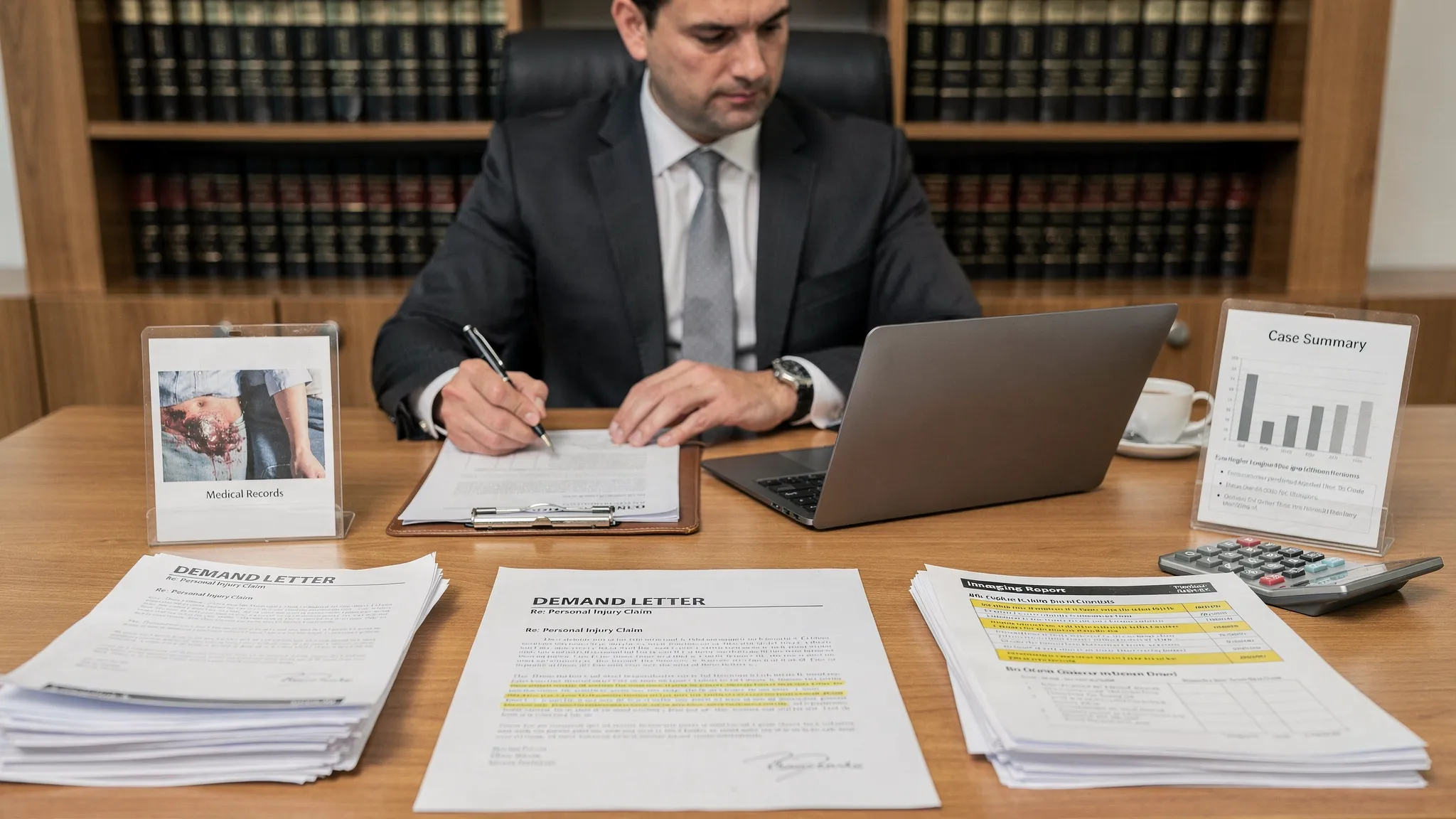
5) Add exhibits that defend value fast
Think in terms of what survives a skeptical skim. Strong, minimal attachments beat a 300-page PDF.
High-impact exhibits often include:
- Key imaging reports (highlighted excerpts where allowed)
- A medical billing summary (table format)
- A wage loss letter or payroll proof
- Photos (injury progression, scarring, property damage, hazard condition)
- A short “limitations” declaration from the client that matches the records
If your matter involves an incident with multiple witnesses or attendees, consider a quick way to collect contemporaneous photos and videos before they disappear. A QR-based photo capture workflow like Revel.cam can help centralize media from a group without requiring everyone to install an app, which can be useful when you are trying to preserve scene context early.
6) Demand in a way that creates a negotiating corridor
An anchor is not just the number, it is the corridor you build around it.
Practical techniques:
- Use a bracketed rationale: “Given specials of $A, documented limitations for B months, and venue risk, a full value range is $X to $Y. We demand $Y to resolve pre-suit.”
- Offer a clean expiration: a realistic deadline that signals readiness, not bluster.
- Define what you want next: pay by date, confirm lien handling approach, request policy limits affidavit where applicable.
Avoid ultimatums that you will not act on. Credibility is part of the anchor.
A quick table of anchoring moves that work
| Anchoring move | What it does to settlement value | How to execute in the letter |
|---|---|---|
| Trial-style liability theme | Raises perceived probability of plaintiff verdict | 3 to 6 paragraphs: duty, breach, causation, rebut defenses |
| Auditable damages math | Forces negotiation within your framework | Break out specials, future care, wage loss, then non-economic rationale |
| One-page medical chronology | Reduces “skim discount” and gap arguments | Timeline with objective findings and treatment compliance |
| Comparable outcomes bracket | Makes your number feel market-based | State a range, explain why your facts place you high in the band |
| High-signal exhibits | Defends value quickly for internal review | Attach only the documents that prove your thesis |
| Clear corridor and deadline | Converts “reviewing” into a decision | Demand amount + expiration + what constitutes acceptance |
Common mistakes that weaken your anchor
- Opening with emotions before proof. Start with liability and corroborated facts, then humanize.
- Inconsistent numbers. If bills, liens, and wage loss do not reconcile, your anchor becomes negotiable downward.
- Overstuffing attachments. More pages often means less reading.
- Ignoring the defense narrative. If you do not address the obvious attacks, the defense will anchor the discussion instead.
Using AI to draft faster without losing credibility
Speed helps, but only if the output is litigation-ready and accurate. Platforms like TrialBase AI are designed to turn uploaded records into practical work product, including automated demand letter drafting, medical summaries, and deposition outlines, so you can spend more time pressure-testing the theory, tightening the chronology, and selecting exhibits that hold up if the case is filed.
Your anchor should feel like it came from a lawyer preparing for trial, because that is what it is: your first, best chance to set the settlement value ceiling before the defense sets it for you.