Litigating a Case: Common Bottlenecks and How to Avoid Them
.png)

Litigating a case is rarely slowed down by a single “big” issue. More often, it is death by a thousand cuts: a missing record, a poorly tagged exhibit, a rushed deposition outline, or a demand that takes two days longer than it should because the file is not organized.
Below are the most common litigation bottlenecks legal teams hit while litigating a case, plus practical ways to avoid them without sacrificing quality.
Bottleneck 1: Intake chaos (and rework later)
When intake is inconsistent, every downstream task gets harder. Key facts live in emails, documents arrive without context, and deadlines are set before anyone has a complete view of damages, liability, or coverage.
How to avoid it
- Use a consistent intake checklist (parties, dates, venue, injuries, treatment timeline, insurance, prior claims, key documents).
- Create a single “source of truth” location for the working file and keep it current.
- Convert early documents into usable case assets (timeline, issues list, initial damages snapshot) while the facts are fresh.
Bottleneck 2: Medical records and bills (volume, gaps, and inconsistent summaries)
In PI and med-mal matters especially, the record set is large, repetitive, and full of time sinks: duplicate PDFs, missing date ranges, illegible scans, and inconsistent provider naming. Teams often lose time re-summarizing the same treatment history for demand, pleadings, mediation, and trial.
How to avoid it
Standardize your approach:
- Define a uniform medical chronology format (date, provider, complaint, findings, treatment, billing).
- Track record requests and gaps, so you are not preparing settlement packages on incomplete data.
- Reuse a single vetted medical summary as the foundation for demand, depo prep, and trial themes.
For background on why medical documentation quality matters, see the NIH’s overview of medical record documentation practices.
Bottleneck 3: Discovery bloat and weak issue tagging
Discovery often becomes a storage problem instead of an argument-building process. Teams collect more than they can synthesize, and key admissions or inconsistencies are hard to find when you need them.
How to avoid it
- Tie discovery to issues (liability elements, causation, damages, credibility), not just categories.
- Decide early what “hot docs” means for the case and tag accordingly.
- Build a short “discovery-to-themes” memo as you go, not at the end.
If you litigate in federal court, it helps to anchor your planning in the Federal Rules of Civil Procedure, especially Rule 26.
Bottleneck 4: Demand letters that take too long (or do not match the file)
Demand drafting frequently turns into a manual compilation project: pulling treatment highlights, inserting exhibits, summarizing liability, calculating specials, and aligning the narrative with the records.
How to avoid it
- Treat demand as a structured deliverable, not a blank page.
- Maintain a demand “core” (liability theory, damages framing, settlement posture) that can be updated as new records arrive.
- Use a consistent exhibit strategy so the adjuster can verify each claim quickly.
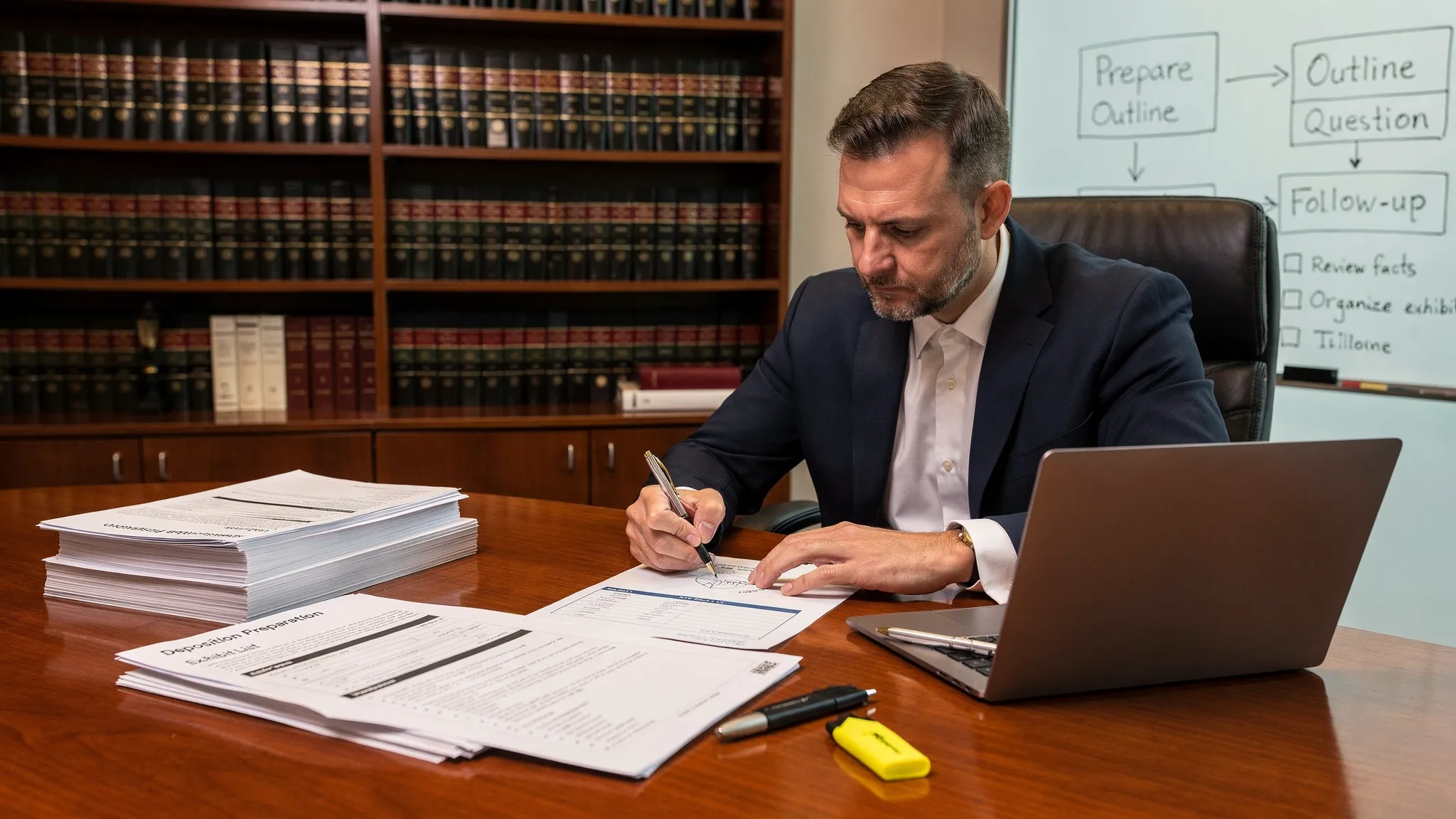
Bottleneck 5: Deposition prep that starts too late
Even strong litigators can get trapped by late prep, especially when the record is long. The result is a deposition outline that is either too generic (misses contradictions) or too detailed (hard to execute live).
How to avoid it
- Start with objectives (elements to prove, impeachment targets, settlement leverage), then design the outline.
- Pre-build witness folders: key documents, key dates, prior statements, and 10 to 15 “must ask” questions.
- Create a one-page “depo map” for the team: admissions needed, exhibits to mark, and follow-ups if the witness dodges.
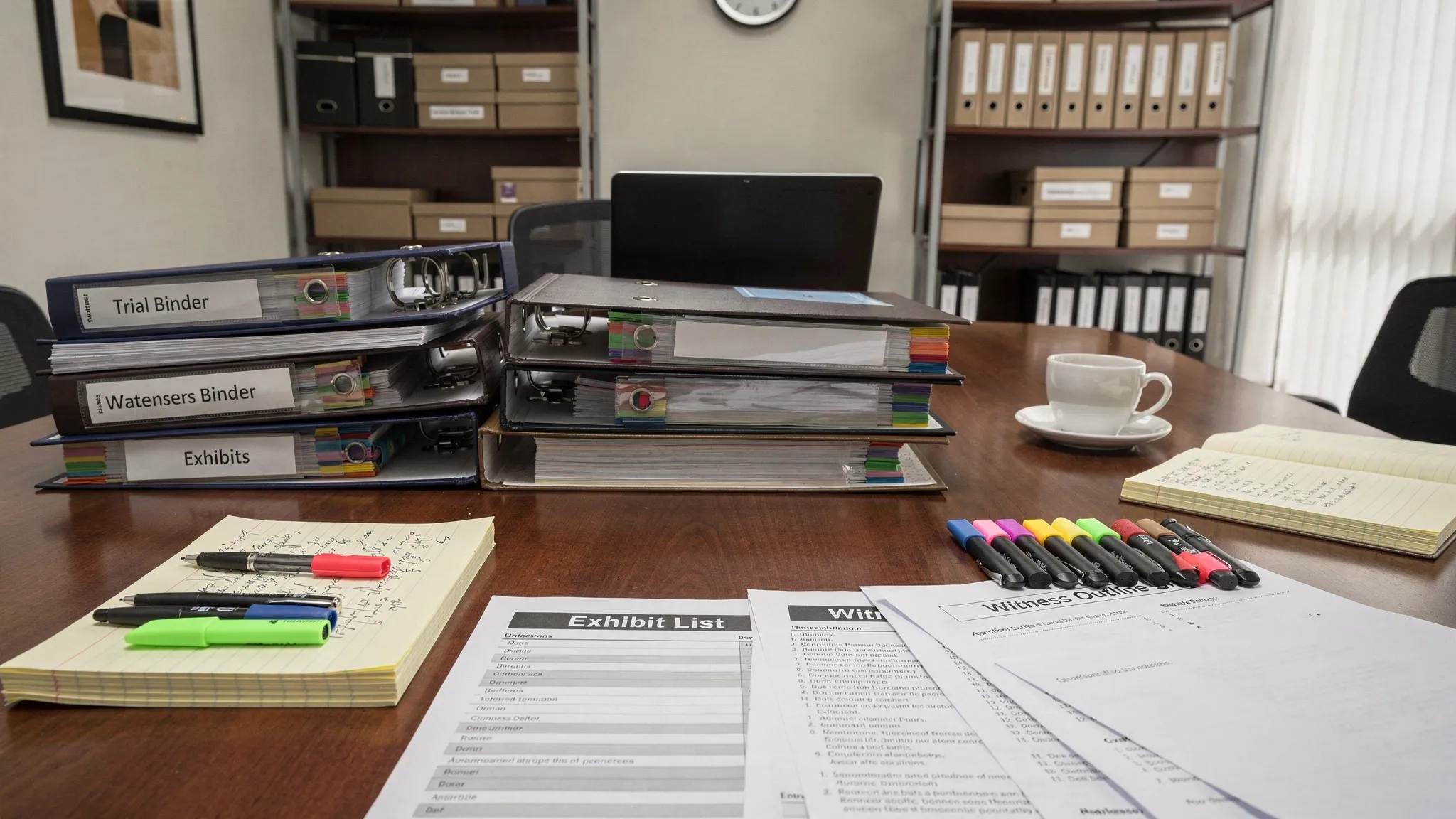
Bottleneck 6: Trial materials assembled at the worst possible time
Trial exhibits, demonstratives, witness outlines, and chronologies often get built when the team is already overloaded with motions in limine, pretrial filings, and settlement talks.
How to avoid it
- Build trial-ready assets incrementally, starting with the first strong chronology.
- Maintain a running exhibit list with notes on purpose (foundation, impeachment, damages support).
- Keep a “proof chart” that connects each claim/defense element to the evidence you already have.
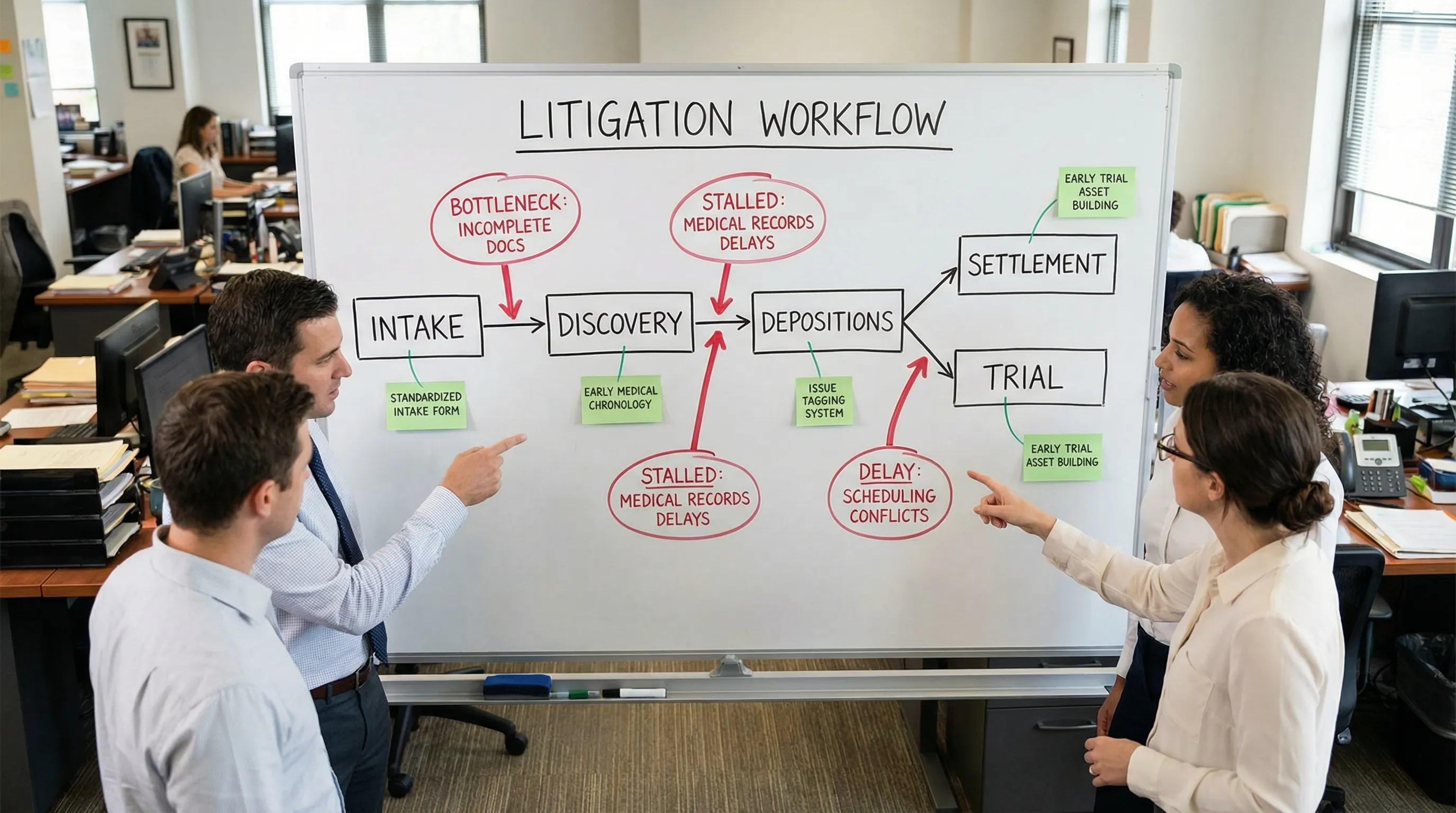
Quick reference: bottlenecks and fixes
| Bottleneck | What it looks like | What fixes it | What AI can help with (when used well) |
|---|---|---|---|
| Intake disorder | Facts scattered, missing key docs, unclear damages | Standard intake checklist, single source of truth | Fast document analysis and structured extraction |
| Medical record overload | Duplicate PDFs, gaps, repeated summaries | Standard chronology, gap tracking, reuse vetted summary | Medical summary creation and rapid chronology building |
| Discovery bloat | Too many docs, weak issue linkage | Issue tagging, “hot doc” definition, theme memo | Discovery process simplification and case analytics |
| Slow demand drafting | Manual compilation, inconsistent exhibits | Demand template system, exhibit strategy | Automated demand letter drafting from uploaded docs |
| Late depo prep | Generic outlines, missed contradictions | Objectives-first outline, witness folders, depo map | Deposition outline generation tied to key documents |
| Last-minute trial prep | Exhibit scramble, uneven witness prep | Incremental trial assets, proof chart | Trial material preparation and workflow management |
A practical way to reduce bottlenecks: treat litigation like a production workflow
The teams that move fastest while litigating a case are not “working harder.” They are standardizing work.
A simple operating model:
- One intake structure that produces the same core outputs every time (case synopsis, timeline, initial damages view).
- One evolving chronology (especially medical) that feeds every major milestone.
- One evidence-to-issues map so discovery supports arguments, not just storage.
- One collaboration workspace where drafts, versions, and exhibits do not splinter across inboxes.
Done consistently, this eliminates rework, reduces surprises, and improves settlement posture because you can support your numbers quickly.
Frequently Asked Questions
What is the biggest cause of delay when litigating a case? The most common cause is rework from inconsistent intake and disorganized documents, which snowballs into slower discovery, slower demands, and rushed deposition prep.
How early should we start preparing trial materials? Earlier than most teams think. Start as soon as you have a reliable chronology and a clear issues list. Building incrementally prevents the pretrial crunch.
How do you keep discovery from becoming “document dumping”? Tie every request, production review, and tag to specific issues (liability elements, causation, damages, credibility). If it does not move an issue, it is lower priority.
What should a strong deposition outline include? Clear objectives, the admissions you need, the exhibits you will use, and planned follow-ups for likely evasions. Too much detail can be as harmful as too little.
Can AI actually help with litigation prep without increasing risk? Yes, when used to speed up structured tasks (summaries, chronologies, outlines) and when a legal professional reviews outputs for accuracy and strategy.
Build case-ready outputs faster with TrialBase AI
If your biggest bottlenecks are summarizing records, drafting demands, organizing discovery, or turning documents into deposition and trial materials, TrialBase AI is designed for that workflow. You can upload your documents and generate litigation-ready outputs like demand letters, medical summaries, deposition outlines, and trial materials in minutes.
Explore TrialBase AI here: https://ai.trialbase.com