Deposition Before Trial: What to Lock In and When
.png)
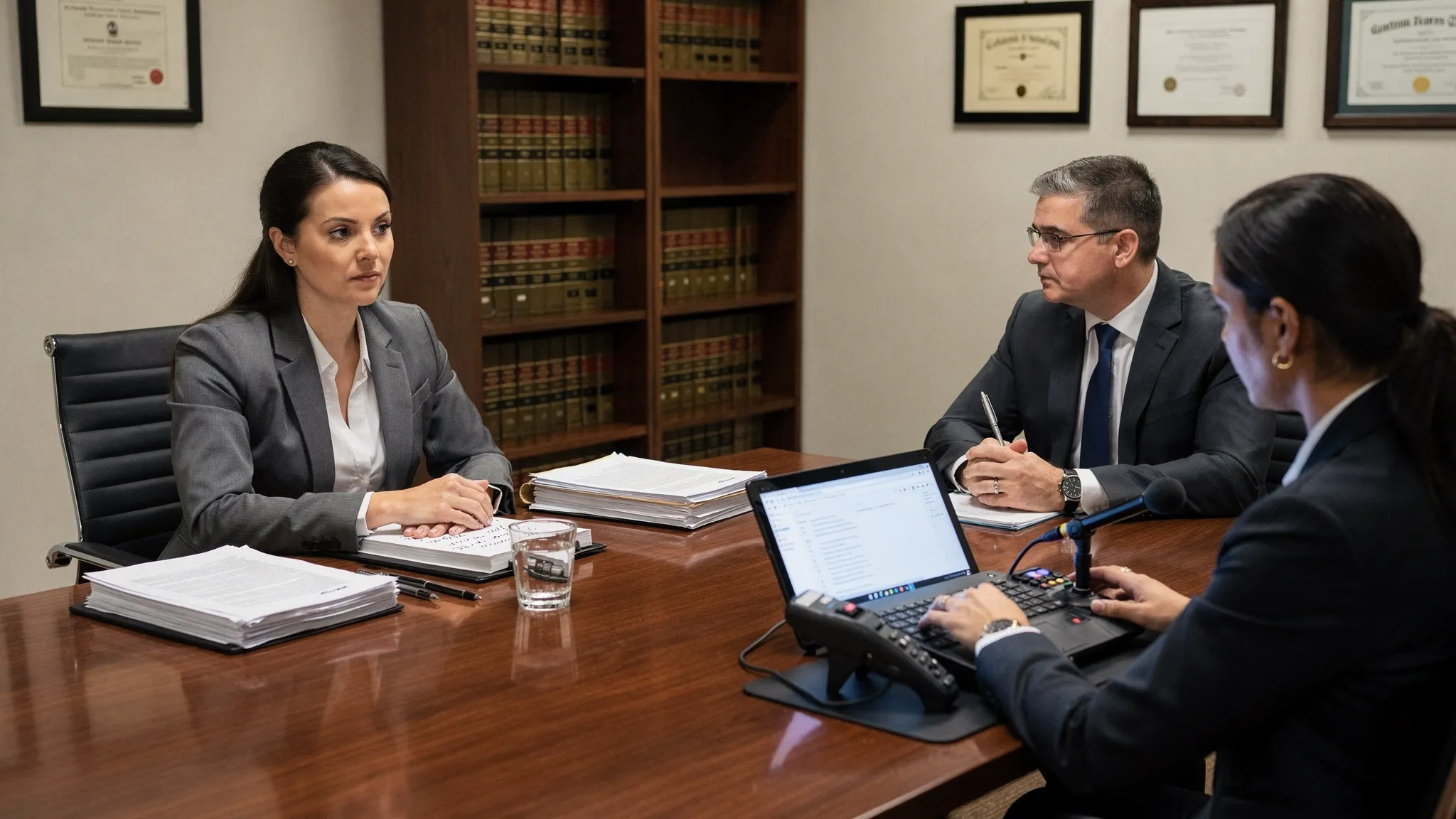
A deposition is often the last time you will hear a witness’s story in a controlled setting before the pressure and choreography of trial. Done well, a deposition before trial does two things at once: it locks in usable testimony and it shrinks the range of surprises that can derail your themes, damages model, or admissibility plan.
Below is a practical, trial-forward view of what to lock in and when, so your deposition record supports motions, mediation, and the trial outline you actually want to run.
What “locking it in” really means
“Locking in” is not only getting a witness to repeat helpful facts. It is building a record you can:
- Use for impeachment at trial.
- Use as substantive evidence when rules allow (for example, certain party or unavailable-witness scenarios).
- Cite cleanly in summary judgment or Daubert/Frye style challenges.
- Translate into jury-ready story beats (simple, chronological, and consistent).
Your jurisdiction’s rules control what you can use and how. In federal practice, deposition mechanics are primarily governed by FRCP 30 and trial use by FRCP 32. State counterparts may differ on designations, objections, and unavailable-witness standards.
What to lock in during a deposition before trial
1) The “no-wiggle” timeline
Jurors decide credibility through sequence. So should you.
Lock in:
- Dates, times, and locations (who was there, who left, who saw what).
- The witness’s source of knowledge (personal observation vs hearsay vs inference).
- Any prior inconsistent timeline statements (texts, emails, recorded statements, incident reports).
Practical tip: Ask for the witness’s “best memory” and what they would say if shown contrary documentation. You are building a fork in the road for impeachment.
2) Elements and defenses (liability admissions you can actually use)
For each claim/defense element, aim for one of three outcomes: admission, narrowing, or a clear “I don’t know.” “I don’t know” can be powerful when it knocks out a defense narrative.
Lock in:
- Duties, policies, standards, and who owned them.
- What the witness contends caused the event (and what did not).
- Comparative fault positions and what facts support them.
- Notice, foreseeability, prior similar incidents, and training.
3) Damages: the clean chain from event to impact
Even strong liability cases lose value when damages are messy.
Lock in:
- The witness’s damages theory in plain language.
- Medical causation narrative (what symptoms began when, and what changed over time).
- Treatment chronology, gaps, prior conditions, and alternative explanations.
- Wage loss details: job duties, missed time, accommodations, and documentation.
If you anticipate medical disputes, use deposition time to pin down the “before vs after” baseline and confirm exactly which providers and records the witness is relying on.
4) Documents: foundation, authenticity, and “what this means” testimony
If you want to use a record at trial, you typically need a plan for admissibility and a witness who can explain it without overreaching.
Lock in:
- Authentication basics (what the document is, how they received/created it, whether it is complete).
- Whether it refreshed their recollection or whether it is the only basis for their memory.
- The interpretation you need (definitions, acronyms, internal codes, status notes).
This is where many depositions drift into “mark it as Exhibit 12” without securing the one or two sentences you will need later.
5) Prior statements and credibility pressure points
Trial cross works best when the deposition gives you short, quotable commitments.
Lock in:
- Prior written statements, recorded statements, claim forms, and social posts.
- Who helped prepare those statements.
- What the witness reviewed to prepare for the deposition.
If a witness claims they “don’t recall,” confirm whether reviewing a specific document would refresh recollection. That sets up later examination strategy.
6) Experts and technical witnesses: opinions, boundaries, and “concessions you can build on”
For experts, “lock in” means limiting the opinion to what is disclosed and supportable.
Lock in:
- Every opinion, stated simply.
- All materials considered (and what they did not consider).
- Method steps and assumptions.
- Alternative causes and how they were ruled in or out.
If you are in federal court, align your questioning with FRE 702 concepts (reliability, fit, sufficient facts/data) so your transcript is motion-ready.
When to take depositions: a trial-driven sequencing guide
The “right” time is the moment a deposition will create leverage without giving the other side an avoidable preview. Most cases benefit from sequencing, not just scheduling.
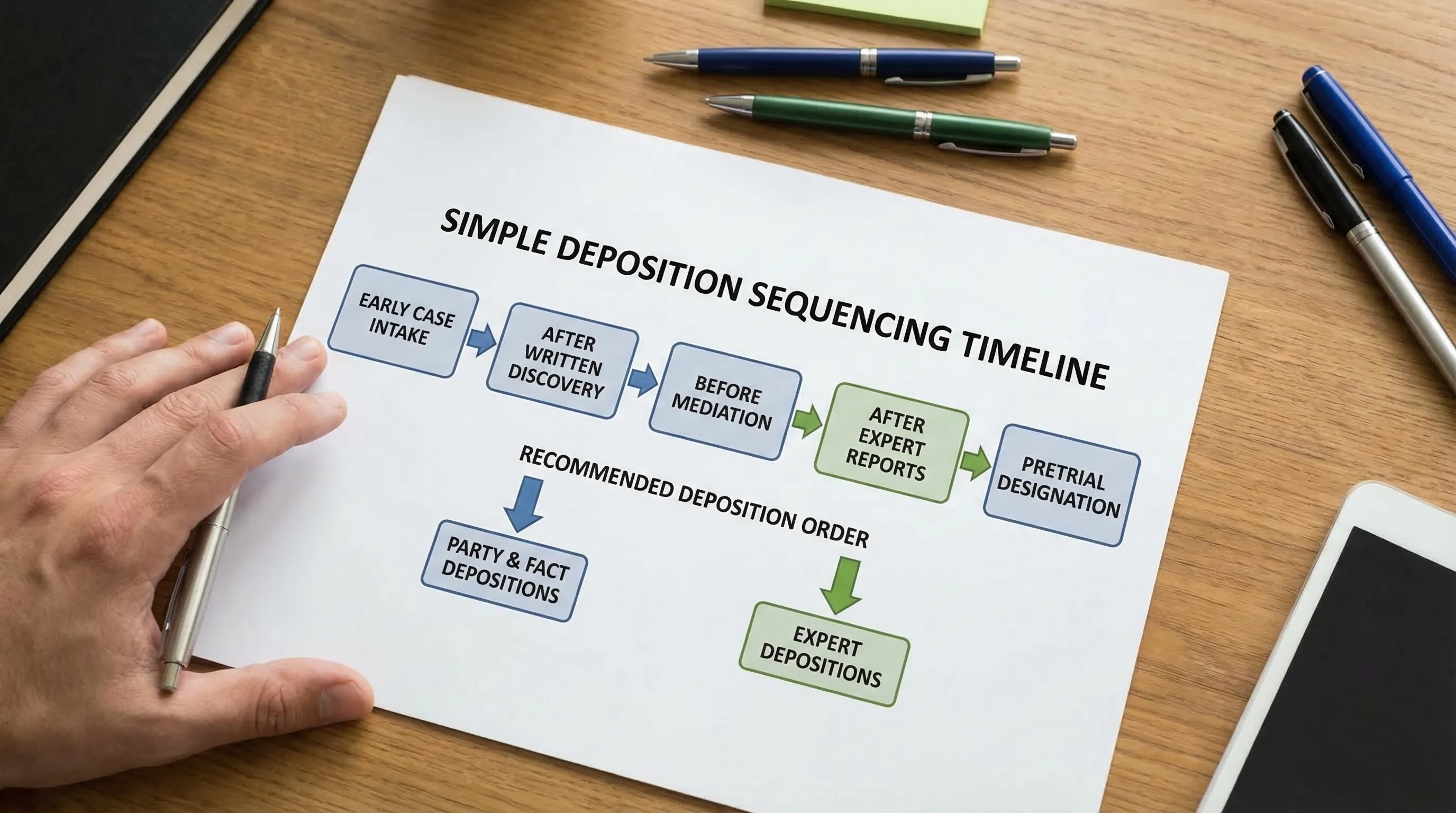
A practical timing matrix
| Deposition type | Best window | What you’re trying to achieve | Risk if taken too early | Risk if taken too late |
|---|---|---|---|---|
| Key fact witnesses | After core documents and interrogatory themes are in hand | Lock timeline, narrow liability, identify missing records | You miss contradictions hidden in later productions | You lose time to chase follow-up discovery |
| Corporate representative (Rule 30(b)(6) style) | After document production is substantially complete | Bind positions on policies, training, notice, and data sources | “Not prepared” testimony becomes a sideshow | Your trial themes are set before you hear the company’s official story |
| Plaintiff/client (in injury cases) | After medical record set is organized and verified | Clean causation and damages narrative | Unforced errors on dates/providers | You cannot fix narrative gaps before mediation/expert work |
| Treaters / percipient medical witnesses | After you map treatment chronology | Confirm symptoms, history, and chart meaning | You lack the full chart and imaging | You miss motion deadlines tied to medical proof |
| Experts | After reports and key opposing admissions are secured | Limit opinions, set up exclusion or strong cross | They update opinions later | No runway for motions or rebuttal experts |
Milestones that should control your calendar
Instead of anchoring to “discovery cutoff,” anchor to these case events:
- After the key document universe is stable (so your exhibits actually trap contradictions).
- Before mediation or a settlement conference (so you can negotiate with real transcript leverage).
- Before expert deadlines and dispositive motion deadlines (so testimony supports motions, not just trial prep).
- With enough buffer for follow-up (a second deposition, subpoenaed records, or targeted RFPs).
Make the deposition record trial-usable, not just “complete”
A trial-usable record has three qualities: it is organized, quotable, and tied to elements.
A simple workflow that helps:
- Build a one-page “locks” sheet by witness: admissions to obtain, documents to authenticate, and impeachment targets.
- Draft your outline to mirror your trial themes (timeline, duty/breach, causation, damages).
- Immediately after the depo, create a clean issue-coded summary and pull the top designations while context is fresh.
Tools can help here, especially when you are handling heavy medical records, multi-party discovery, or repeated deposition cycles. If you want to go from upload to litigation-ready outputs (like medical summaries and deposition outlines) in one place, you can review TrialBase AI for AI-powered litigation support designed to streamline case preparation.