AI on Trial: How to Validate AI Drafts Before Filing
.png)
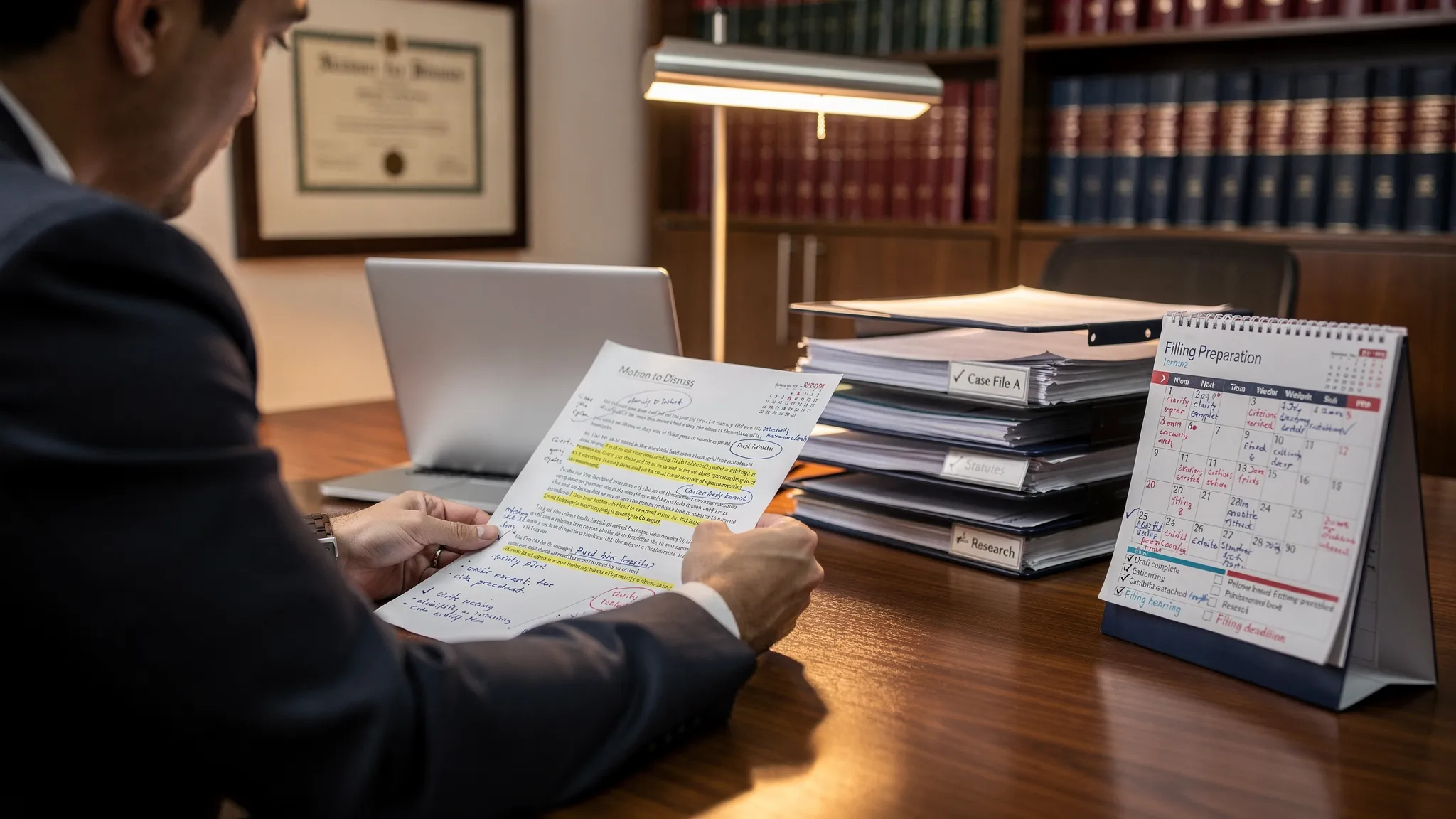
Courts are making it clear that “AI drafted” does not mean “AI excused.” If you file a brief, demand letter, or discovery response with incorrect citations or invented quotes, the responsibility is still yours. The widely cited sanctions in Mata v. Avianca (S.D.N.Y. 2023) were not about using AI, they were about failing to verify what was filed. (See reporting and the order via sources like Reuters.)
This is “AI on trial” in practice: validating AI drafts with a repeatable workflow before anything leaves your office.
What you must validate before filing (and why)
AI can be a high-leverage drafting assistant, especially when you start from a defined record (client intake materials, medical records, discovery, deposition transcripts). But it can also introduce failure modes that look a lot like negligence when they reach the docket.
Three realities drive the need for a validation process:
- Professional responsibility is non-delegable. Rules like FRCP Rule 11 and state equivalents require that factual contentions and legal arguments have support after reasonable inquiry.
- Generative systems can fabricate. Even when a draft sounds confident, it can include non-existent cases, misquoted record facts, or “cleaned up” timelines.
- Confidentiality and privilege risks are easy to miss. Uploading or pasting sensitive content into a tool without appropriate safeguards can create downstream issues.
The good news is that validation can be systematic, fast, and teachable across the team.
A practical validation workflow: from AI draft to file-ready
Think of validation as two layers: (1) verify against the record and the law, (2) verify against the forum and filing standards.
1) Lock the “source of truth” before you review the draft
Validation is much faster when the reviewer knows what controls.
- Identify the authoritative record set (pleadings, discovery responses, exhibits, depo transcript pages, medical records, billing).
- Freeze the version you are reviewing against (so page numbers, Bates ranges, and exhibit labels do not drift).
- Confirm jurisdiction and venue, including local rules and standing orders.
If you are using a litigation support platform such as TrialBase AI to generate demand letters, medical summaries, deposition outlines, or other case materials from uploaded documents, treat the AI output as a draft that must map back to specific pages and exhibits.
2) Run a “record fidelity” pass (facts, dates, numbers, and quotes)
Most filing-risk problems are factual.
Do a quick sweep for:
- Dates and timelines (accident date, treatment sequence, notice deadlines, filing and service dates)
- Money math (medical specials, liens, wage loss, future care projections, policy limits referenced in the draft)
- Attributions (who said what, where it appears, and whether the wording is exact)
A simple standard helps: every factual sentence should be either (a) common background, or (b) traceable to a cite. If you cannot cite it, rewrite or remove it.
3) Verify every legal citation, quotation, and proposition
This is where many AI failures become obvious.
- Pull each cited case in Westlaw, Lexis, Bloomberg Law, or a court database.
- Confirm the case exists, the holding matches the proposition, and the quote is accurate.
- Shepardize/KeyCite for negative treatment.
- Check jurisdictional fit (do not rely on out-of-circuit authority without a reason).
If the draft includes string cites, review them with extra suspicion. AI often produces plausible-looking clusters that do not actually support the sentence.
4) Check procedural compliance for the forum (and your judge)
Even a factually perfect draft can fail on procedural details.
Validate:
- Filing requirements (format, word/line limits, font, exhibits, meet-and-confer statements)
- Evidentiary posture (what is properly in the record at this stage)
- Required elements for the motion type or pleading standard in your jurisdiction
If your court requires AI disclosures or certifications, follow the applicable order or local rule. Requirements vary, and they change.
For ethics and competence considerations around generative AI, many practitioners start with the ABA’s guidance, including ABA Formal Opinion 512 (2024).
5) Do a risk scan for confidentiality and privilege
Before filing, confirm the draft does not:
- Reveal privileged strategy in a public filing
- Include internal notes, settlement ranges, or negotiation positions that should not be on the record
- Mislabel privileged documents or imply waiver
Separate from the filing itself, ensure your AI usage fits your firm’s confidentiality obligations. Use tools and workflows that align with your jurisdiction’s ethics guidance and your client’s expectations.
6) Make the draft “court-readable” (not just correct)
AI tends to over-write. Judges and adjusters respond better to clean structure.
- Replace vague adjectives with record-backed specifics.
- Collapse repetitive paragraphs.
- Make headings do real work (issue, rule, application, conclusion).
- Remove speculative language that is not supported.
This step often improves outcomes more than adding another citation.
7) Add a human sign-off step (and document it)
A lightweight audit trail helps quality and reduces institutional risk.
Have a standard sign-off that captures:
- Who verified facts and against what documents
- Who validated citations and when
- What changed from the AI draft (high level)
This does not need to be burdensome. It just needs to be consistent.
A one-page checklist you can reuse
Use this as your “AI on trial” pre-filing gate. Assign an owner for each row.
| Validation area | What to check | Fast test to catch issues |
|---|---|---|
| Facts and timeline | Dates, sequence, medical chronology, parties | Pick 10 factual sentences, confirm each has a record cite |
| Numbers | Specials, wage loss, totals, policy limits mentioned | Recalculate totals from source docs, do not trust rounded figures |
| Record quotes | Depo excerpts, medical chart language, emails/texts | Confirm exact wording and page/line or Bates range |
| Case citations | Existence, holding, quote accuracy, treatment | Open each case, verify the cited proposition in context |
| Procedural posture | Standard of review, what evidence is allowed | Ask: “Can I attach this, cite this, rely on this at this stage?” |
| Confidentiality/privilege | Waiver risk, strategy leakage | Search draft for internal terms (reserve, authority, “we can settle for”) |
| Style and clarity | Headings, redundancy, tone | Remove filler, shorten, and make each section prove one point |
Where AI helps most (when validated correctly)
Validated AI drafting is especially effective when you are turning large document sets into first-pass work product, for example:
- Demand letters built from treatment records and damages support
- Medical summaries that organize chronology and key diagnoses
- Deposition outlines that track issues, impeachment points, and missing facts
That is the core promise of tools like TrialBase AI: upload documents and get litigation-ready starting points in minutes. The professional edge comes from pairing speed with a disciplined validation gate before filing.
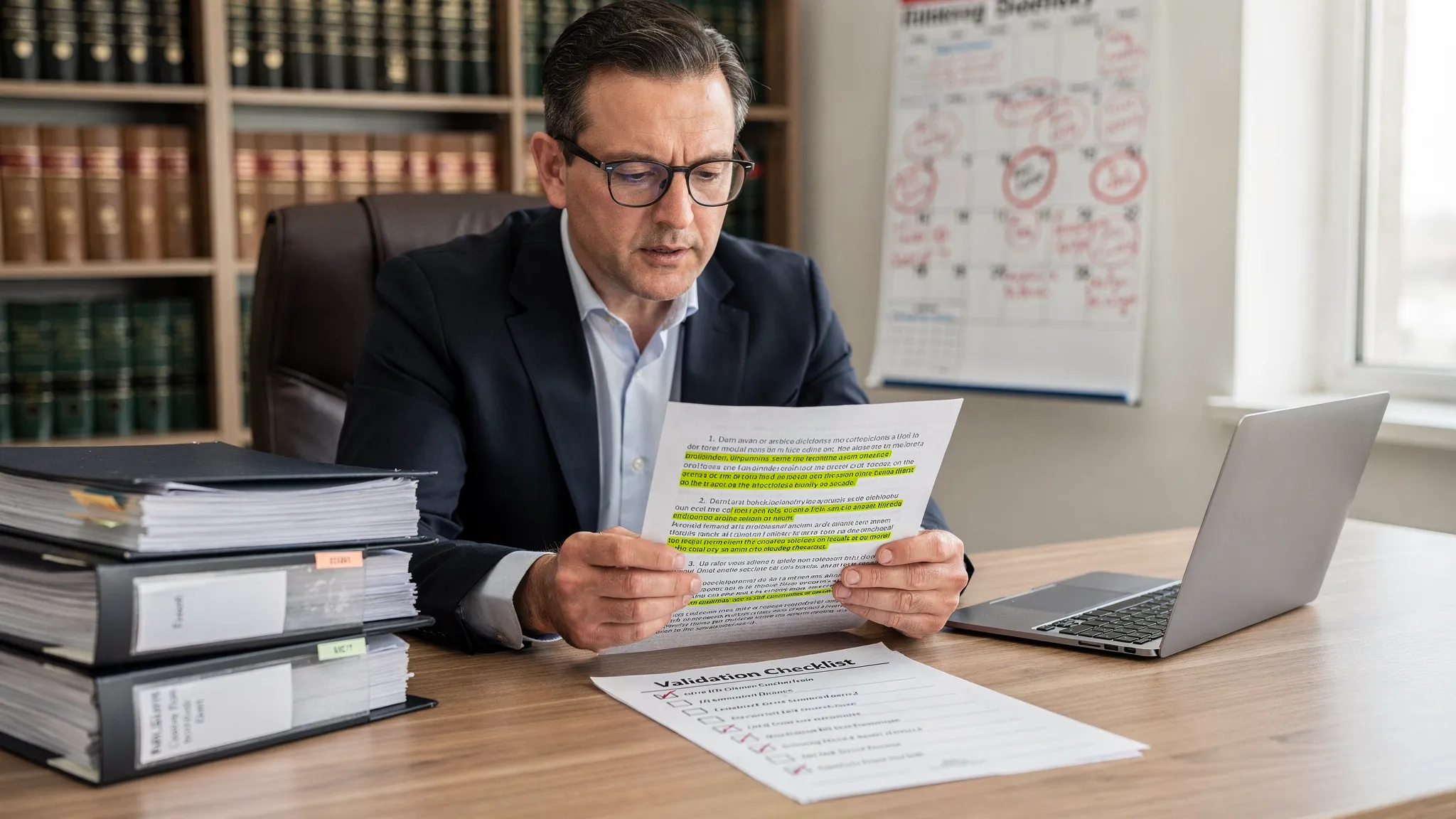
The standard to aim for: “auditable accuracy”
The goal is not to prove the AI was right. The goal is to ensure your filing is correct, supportable, and explainable if questioned by a judge, opposing counsel, or your client.
If you adopt a consistent workflow, you can capture the upside of AI drafting while reducing the exact risks that have put AI use “on trial” in courts and headlines.